 Senior Health Wellness
Your grandmother was sharp at breakfast yesterday. This morning, she does not recognize her own kitchen. She is agitated, a little unsteady, and insists it is 1985. Your first thought is a stroke, or maybe sudden dementia.
But the cause is often far more ordinary. A urinary tract infection can trigger startling changes in older adults, sometimes before any typical symptom shows up. This guide explains how a UTI in elderly adults looks different, why it causes confusion, and what Boynton Beach families can do to prevent it.
What Are UTI Symptoms in the Elderly?
UTI symptoms in the elderly often look different from those in younger adults. Instead of burning or frequent urination, older adults may show sudden confusion, agitation, dizziness, falls, loss of appetite, or new incontinence. Fever may be mild or absent. Because these signs are easy to mistake for aging or dementia, many infections go unnoticed at first.
Classic symptoms can still appear. Watch for both sets of signs.
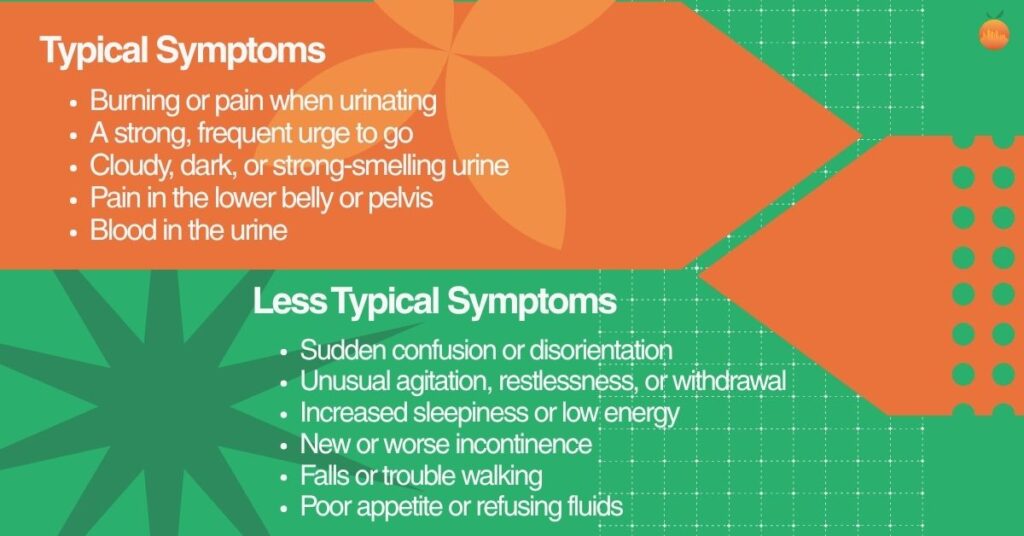
Typical symptoms
- Burning or pain when urinating
- A strong, frequent urge to go
- Cloudy, dark, or strong-smelling urine
- Pain in the lower belly or pelvis
- Blood in the urine
Less typical symptoms common in older adults
- Sudden confusion or disorientation
- Unusual agitation, restlessness, or withdrawal
- Increased sleepiness or low energy
- New or worse incontinence
- Falls or trouble walking
- Poor appetite or refusing fluids
The key word is sudden. Changes that appear over hours or a day or two deserve attention, especially when they are out of character.
Can a UTI Cause Confusion in the Elderly?
Yes. A UTI can cause sudden confusion in elderly adults, a condition known as delirium. It may appear within hours or days and can include disorientation, agitation, hallucinations, or unusual drowsiness. People with dementia are especially vulnerable. Confusion usually improves once the infection is treated, though full recovery can take days or even weeks.
Delirium is a medical emergency, not a normal part of aging. It differs from dementia in one important way. Dementia develops slowly over months and years. Delirium comes on fast and tends to fluctuate, with good hours and bad hours in the same day.
Why Do UTIs Cause Confusion in Older Adults?
Researchers are still studying the exact mechanism. However, several factors likely play a role.
First, the body’s response to infection releases inflammatory chemicals into the bloodstream. An aging brain is more sensitive to that inflammation. Second, infections often lead to dehydration and fever, both of which can scramble thinking. Third, many older adults take several medications. Illness can change how those drugs affect the body.
People who already have dementia, Parkinson’s disease, or a history of stroke are at the highest risk. Their brains have less reserve to handle the extra stress.
Why Older Adults Get More UTIs
A UTI in elderly adults is one of the most common infections doctors see. Several age-related changes raise the risk:
- Weaker bladder muscles that do not empty fully
- Lower estrogen levels in women after menopause
- An enlarged prostate in men, which can block urine flow
- Incontinence and the use of pads or briefs
- Urinary catheters
- Diabetes, which can make infections more likely
- Drinking less water, often to avoid bathroom trips
- Limited mobility that delays trips to the toilet
Women face a higher risk overall. Still, older men develop UTIs far more often than younger men do.
Extra Challenges When Your Loved One Has Dementia
Dementia makes every step of this harder. A person with memory loss may not be able to describe burning or pain. They may not remember when they last used the bathroom. And they may refuse fluids because they forget they are thirsty or dislike frequent trips to the toilet.
Behavior often becomes the only clue. A calm person may start pulling at clothing, pacing, or resisting care. Someone who usually sleeps well may suddenly be up all night. These shifts can look like worsening dementia, but they may point to an infection instead.
Evening confusion can also get worse during an infection. If your loved one already struggles in the late afternoon, a sudden spike is worth reporting. Our guide on sundowning explains how to tell normal evening patterns from new changes.
Trust your instincts. You know your loved one’s baseline better than anyone. If something feels off, say so clearly when you call the doctor.
Keep a Simple Health Log
A short daily log can help doctors spot a UTI in elderly patients faster. It also helps you notice patterns you might otherwise miss.
Each day, jot down a few quick notes:
- Fluids your loved one drank, and roughly how much
- How often they used the bathroom, and any accidents
- Mood, alertness, and sleep
- Appetite and meals eaten
- Any falls, stumbles, or new weakness
- Temperature, if they seem unwell
Bring the log to appointments. A clear record of when changes started gives the doctor far more to work with than “she has not been herself lately.”
A Word of Caution: Not Every Positive Test Is an Infection
Here is something many families never hear. Bacteria in the urine are common in older adults, even when there is no infection at all. Doctors call this asymptomatic bacteriuria. It is especially common in women and in people living in nursing homes.
Treating it with antibiotics usually does more harm than good. Unnecessary antibiotics can cause side effects, lead to resistant bacteria, and trigger a serious gut infection called C. diff. It also means the real cause of a person’s confusion may be missed.
Related Study/Source: The Infectious Diseases Society of America updated its guidelines in 2019. It advised doctors not to treat bacteria in the urine of older adults with delirium alone, unless there are signs of a urinary or whole-body infection such as fever. Instead, doctors should look for other causes, such as dehydration, medication effects, or a different infection.¹
So if a urine test comes back positive, ask the doctor questions. Are there other signs of infection? Could something else explain the confusion? A careful answer protects your loved one.
When a UTI Becomes an Emergency
Most UTIs respond well to prompt treatment. But untreated infections can spread to the kidneys or bloodstream. That can become life-threatening, especially for frail older adults.
Call the doctor right away or seek emergency care if your loved one has:
- High fever, shaking, or chills
- Pain in the back or side, below the ribs
- Nausea or vomiting
- Rapid breathing or a racing heart
- Very low energy or trouble staying awake
- Confusion that worsens quickly
- Cold, clammy, or mottled skin
These can signal a kidney infection or sepsis. Do not wait to see if they improve.
What to Expect From Treatment
A doctor will usually test a urine sample to confirm the infection and identify the bacteria. Then they will prescribe an antibiotic matched to the infection. It is important to finish the full course, even if your loved one feels better quickly.
Confusion often starts to lift within a few days of treatment. For some older adults, though, full recovery takes longer. Patience matters here. Keep routines familiar, keep lighting good, and offer plenty of fluids. A calm, steady environment helps the brain recover.
After a serious infection, a short stretch of skilled nursing at home can help. A nurse can monitor symptoms, check that medications are working, and catch early signs of trouble. Our guide to skilled nursing at home explains what Medicare covers.
Watch for Falls During Recovery
Infections leave many older adults weak and unsteady. Add dizziness or confusion, and the risk of falling rises sharply. In fact, a sudden fall is sometimes the first sign that an infection is brewing.
During recovery, keep walkways clear and well lit. Put a night-light between the bedroom and bathroom, since urgent nighttime trips are common. Make sure your loved one uses a cane or walker if they have one. And consider having someone nearby during the first few days after treatment starts.
A fall can also leave lasting fear. Our article on the fear of falling explains how to rebuild confidence safely.
How to Prevent a UTI in Elderly Loved Ones
Not every infection can be prevented. However, these habits lower the risk noticeably.
Keep fluids flowing. Water helps flush bacteria from the bladder. This matters even more in Boynton Beach, where heat and humidity can drain the body quickly. Offer water throughout the day rather than all at once.
Stay on a bathroom schedule. Encourage trips every two to three hours. Holding urine too long gives bacteria time to multiply.
Practice good hygiene. Wiping front to back helps keep bacteria away from the urinary tract. Change incontinence products promptly when wet or soiled.
Choose breathable clothing. Cotton underwear and loose clothing reduce moisture and warmth, which bacteria love.
Review medications. Some drugs cause urine retention or dehydration. Ask the doctor or pharmacist to review the full list.
Discuss prevention options. For older women with repeated infections, doctors sometimes recommend vaginal estrogen or other strategies. The evidence on cranberry products is mixed, so check with the doctor first.
Avoid unnecessary catheters. Catheters are a major source of infection. If your loved one has one, ask whether it is still needed.
How City Choice Helps Boynton Beach Families
For more than two decades, City Choice Home Health Care has cared for families in Boynton Beach, Delray Beach, and Boca Raton. Our Medicare-certified team has served more than 1,000 families. We know that small daily habits often make the biggest difference in preventing infections.
Our caregivers and nurses can help by:
- Encouraging regular fluids and tracking how much your loved one drinks
- Assisting with toileting, hygiene, and incontinence care
- Noticing early changes in behavior, appetite, or mobility
- Reporting concerns quickly to family and doctors
- Supporting recovery at home after an infection or hospital stay
Because our caregivers see your loved one regularly, they often notice subtle changes first. That early warning can mean treatment starts days sooner. If a recent infection led to a hospital stay, our article on what happens after hospital discharge walks through next steps.
Frequently Asked Questions
How Long Does UTI Confusion Last in the Elderly?
It varies. Many people improve within a few days of starting antibiotics. For some, especially those with dementia, it can take weeks to return to their usual selves. If confusion does not improve, talk to the doctor about other possible causes.
Can Dehydration Cause Symptoms Like a UTI?
Yes. Dehydration alone can cause confusion, dizziness, and dark urine. It also raises the risk of a real infection. That is one reason good hydration is so important for older adults.
Does Cranberry Juice Prevent UTIs?
The research is mixed. Some studies suggest cranberry products may lower the risk of repeat infections in certain people. But they will not cure an active infection, and sugary juices are not ideal for everyone. Ask the doctor before relying on them.
Should I Keep Home Urine Test Strips on Hand?
Some families do. However, older adults often have bacteria in their urine without infection, so a positive strip can be misleading. It is best to use them only with a doctor’s guidance.
Are Men at Risk for UTIs Too?
Yes. Older men get UTIs more often than younger men, often because an enlarged prostate prevents the bladder from emptying fully. Their infections are sometimes more complicated to treat.
Sudden Changes Deserve Attention
A sudden shift in behavior is not just “getting older.” Often it is the body asking for help. Knowing how a UTI in elderly adults looks can help your family act fast, avoid unnecessary treatment, and get your loved one back to themselves sooner.
Related Articles
- Effects of Anesthesia on Elderly Patients
- Fear of Falling in Delray Beach
- Skilled Nursing at Home: What Medicare Will and Won’t Cover
- What Happens After Hospital Discharge
- Dementia Care for Boca Raton Families
Sources
- Nicolle LE, Gupta K, Bradley SF, et al. Clinical practice guideline for the management of asymptomatic bacteriuria: 2019 update by the Infectious Diseases Society of America. Clin Infect Dis. 2019;68(10):e83-e110. doi:10.1093/cid/ciy1121
- Mody L, Juthani-Mehta M. Urinary tract infections in older women: a clinical review. JAMA. 2014;311(8):844-854. doi:10.1001/jama.2014.303