 Family Caregiver Resources
Surgery itself often goes smoothly. It’s the days afterward that sometimes catch families off guard, an older adult who seems confused, forgetful, or just not quite themselves. This isn’t unusual, and it isn’t something families should feel alarmed into silence about. It’s also more common than most people expect, which makes knowing what to watch for genuinely useful.
The effects of anesthesia on elderly patients differ meaningfully from younger adults. This guide covers what to watch for and why older adults face higher risk. It also covers how in-home support helps families navigate the recovery period with more confidence. City Choice routinely work with Palm Beach County families through this exact time frame, before surgery and through the first weeks at home.
The Effects of Anesthesia on Elderly Patients
Aging changes how the body processes medications, anesthesia included. Slower metabolism, reduced organ function, and a more sensitive nervous system all play a role in the effects of anesthesia on elderly patients. What clears quickly from a younger body can linger longer in an older one, extending the window where confusion or grogginess shows up.
Necessary surgery shouldn’t be avoided because of this. It’s a reason to prepare differently instead. Understanding the effects of anesthesia on elderly patients ahead of time helps families know what’s expected and what warrants a call to the doctor. Our Registered Nurses walk families through what’s typical versus what isn’t before that first post-surgery evening arrives.
Risk Factors Worth Discussing With a Physician
Not every older adult faces the same level of risk. Certain factors raise the likelihood of a rougher recovery: pre-existing mild cognitive impairment, multiple chronic health conditions, longer or more complex surgeries, and taking several medications that affect the nervous system. None of these rule out surgery. They’re worth discussing openly with the surgical and anesthesia team beforehand, so everyone involved knows what to watch for. When families raise these risk factors during a City Choice consultation, that information shapes how much support gets built into the care plan from day one.
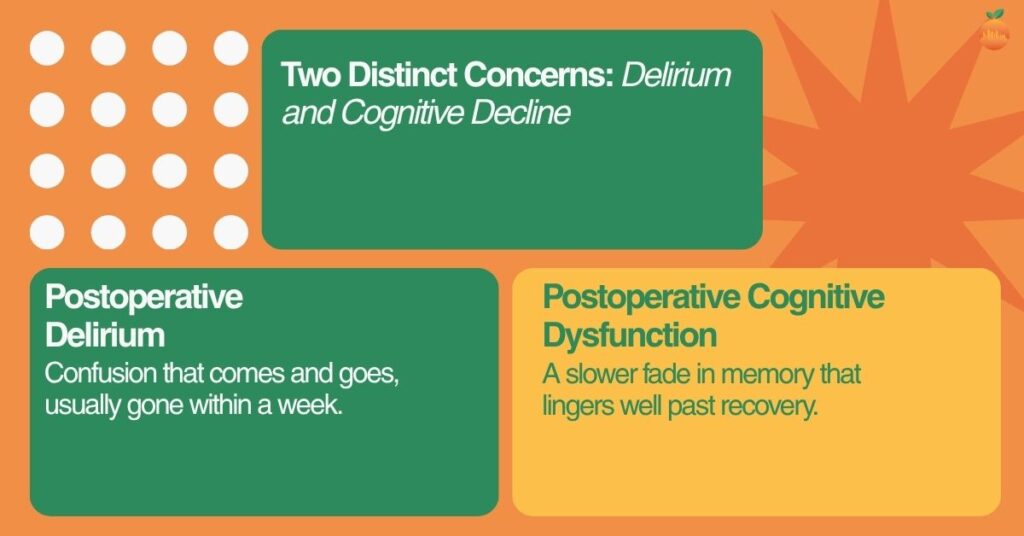
Two Distinct Concerns: Delirium and Cognitive Decline
Families often lump every post-surgery mental change into one category, but two distinct issues are usually at play when considering the effects of anesthesia on elderly patients.
What Is Postoperative Delirium?
Postoperative delirium is temporary confusion, disorientation, or trouble focusing that can appear within days of surgery, particularly in older adults. The confusion may come and go, fluctuating hour to hour, and usually resolves within about a week with proper monitoring. Sudden disorientation or not recognizing familiar surroundings can look alarming, but it’s typically short-lived and treatable. City Choice caregiver are trained to recognize this fluctuating pattern and document it for the family and physician, rather than reacting to any single confusing moment.
Postoperative Cognitive Dysfunction
This is a subtler, sometimes longer-lasting decline in memory or thinking that can persist well beyond the immediate recovery window. It doesn’t affect everyone, and when it occurs, it’s often mild. Still, it’s worth taking seriously, particularly for those who already have some degree of cognitive decline going into surgery.
Why the Distinction Matters
Confusing these two issues can lead to unnecessary worry, or the opposite, dismissing something that actually needs attention. Delirium tends to fluctuate hour to hour and resolves relatively quickly. Cognitive dysfunction is steadier and slower to change, sometimes only becoming noticeable weeks after the initial recovery period ends. Knowing which pattern you’re seeing helps families decide when a call to the doctor makes sense. This is part of why City Choice pairs caregivers with Registered Nurse oversight. This means a caregiver present day to day can flag which pattern is showing up, and a nurse can help the family decide whether it’s time to call the surgeon.
Reducing Risk Before and After Surgery
The American Society of Anesthesiologists has outlined practical steps that meaningfully reduce post-surgery confusion in older patients. A few stand out as particularly relevant for families:
- Request a pre-surgery cognitive baseline. This simple assessment before surgery gives doctors something concrete to compare against afterward.
- Have a caregiver present during recovery. Someone familiar should observe physical and mental changes and report anything concerning to the physician. This is standard practice in every City Choice post-surgical care plan.
- Review medications carefully. Certain drugs affecting the nervous system can worsen confusion when combined with anesthesia.
- Restore hearing aids and glasses immediately. Sensory clarity helps reduce disorientation significantly.
- Choose a recovery space with natural light. A window helps someone track day versus night, which supports mental orientation.
Related Source: American Society of Anesthesiologists. Six Tips to Reduce Confusion in Older Patients After Surgery. Full citation listed in Sources below.
None of these steps require special equipment or expertise. They simply require someone present, paying attention, and ready to flag changes early. City Choice caregivers are placed with exactly that in mind. We want to make sure someone is in the home watching for these specific signs. We want to ensure we have this from the first day back.
How In-Home Care Supports Post-Surgical Recovery
This is exactly where a caregiver’s presence matters most. The ASA’s own guidance names having a caregiver observe and report changes as one of the most effective tools available. That’s precisely the role City Choice caregivers step into during recovery.
Caregivers help track medication schedules, especially important given how certain drugs can interact poorly with lingering anesthesia effects. Subtle shifts in behavior or alertness that a family member checking in briefly might miss don’t go unnoticed. A consistent, familiar presence helps orient someone who’s feeling foggy or disoriented.
Beyond cognitive monitoring, caregivers support the physical side of recovery too. That includes mobility assistance, wound care coordination with a nurse, and meal preparation during a period when cooking might feel overwhelming. General household support helps too, while someone regains strength.
Preparing the Home Before Surgery Day
Some of the most useful preparation happens before surgery even occurs. Arranging caregiver support in advance, rather than scrambling afterward, means someone familiar is already in place the moment your loved one returns home. Simple steps help too: clearing walkways, organizing medications in one visible location, and confirming who will be present during those first critical days. Families who plan this ahead of time tend to feel far less overwhelmed than those figuring it out after the fact. City Choice offers a free consultation before surgery day specifically to put this plan early, so the caregiver assigned to the case already knows the family and the home before recovery begins.
When to Involve Skilled Nursing
Some recovery situations call for more than caregiver-level support. If confusion persists beyond a week, worsens rather than improves, or comes with other concerning symptoms, a Registered Nurse should get involved quickly. City Choice structures care so that transition happens smoothly. Families don’t have to coordinate it themselves during an already stressful time.
Understanding the full range of possible effects of anesthesia on elderly patients helps families respond appropriately. That ranges from brief disorientation to something requiring closer clinical attention. Knowing the difference means responding appropriately rather than either panicking or dismissing real warning signs.
Why Boca Raton Families Choose City Choice for Post-Surgical Support
Recovering from surgery at home works best with a coordinated team, not a single caregiver operating in isolation. City Choice pairs trained caregivers with Registered Nurse oversight, so recovery gets monitored clinically, not just observed casually.
Same-day starts are available for hospital discharges. That matters most in exactly this situation, when a family needs support in place before confusion or complications have a chance to go unnoticed. The 24/7 nursing line stays available for questions about medication timing, unusual symptoms, or general recovery concerns at any hour.
Boca Raton’s proximity to several major hospitals and surgical centers means many families are navigating a discharge-to-home transition on a tight timeline. Having a care plan ready before surgery day, rather than arranging it after the fact, gives families one less thing to manage.
Frequently Asked Questions
How long does post-surgery confusion typically last?
Postoperative delirium usually resolves within about a week, though it can come and go during that period, sometimes seeming better one hour and worse the next. Longer-lasting cognitive changes, known as postoperative cognitive dysfunction, are less common but worth monitoring closely. This matters especially for someone with pre-existing memory or thinking concerns before surgery.
Is memory loss after surgery permanent?
Not usually. Most effects of anesthesia on elderly patients are temporary, resolving within days to a few weeks as the body clears the medication and recovers. In rarer cases, especially in those with pre-existing cognitive decline, some changes may persist longer. This is why consistent monitoring during recovery matters so much for older patients.
Can a caregiver help prevent postoperative delirium?
A caregiver can’t prevent postoperative delirium outright. Consistent presence, medication tracking, and quick reporting of changes are among the most effective tools available for catching and managing it early. The American Society of Anesthesiologists specifically names caregiver observation as one of the most useful steps families can take. A City Choice combined with Registered Nurse oversight covers both halves of that: someone watching a day to day, and a nurse who knows when a change needs a call to the surgeon.
When should I call the doctor about confusion after surgery?
If confusion is severe, worsening, or doesn’t improve within a week, contact the physician promptly rather than waiting to see if it resolves on its own. Sudden major changes in alertness, unresponsiveness, or difficulty waking someone always warrant an urgent call. City Choice’s 24/7 nursing line is also available in the meantime, for families who aren’t sure yet whether what they’re seeing needs the physician tonight or can wait until morning.
Getting Started with City Choice
Understanding the effects of anesthesia on elderly patients helps families know what to expect and when to act. City Choice can provide the consistent, coordinated support that makes post-surgical recovery safer and less stressful for everyone involved.
Call 305-363-7755 or request a free consultation to talk through your loved one’s upcoming surgery and recovery needs.
Related Articles
- What Happens After Hospital Discharge: Why Home Care Is the Next Step
- Levels of Care for Seniors: A Complete Guide From Independent Living to Skilled Nursing