 Senior Health Wellness
Your mother used to handle everything calmly. Now she worries about bills, about falling, and about whether the stove is off. She checks the locks three times. Anxiety in elderly adults is common, and it is easy to miss. Many families write it off as old age. It is not.
This guide explains the signs, the causes, and the treatments that work. It also covers what you can do at home and when to call a doctor. Anxiety is treatable at any age.
What Is Anxiety in Elderly Adults?
Anxiety in elderly adults is persistent, excessive worry that is hard to control and does not fade when the stressor passes. Unlike everyday concern, it interferes with sleep, appetite, and daily activities. It may show up as fear, restlessness, or physical symptoms, and it is a treatable health condition rather than a normal part of growing older.
Anxiety disorders, according to the National Institute of Mental Health, involve more than occasional worry. The worry does not go away, is felt in many situations, and can get worse over time.³ Symptoms can get in the way of relationships and daily life. In severe cases, a person may avoid social events or refuse to leave home.³
Related Study/Source: The National Institute of Mental Health reports that generalized anxiety disorder involves excessive worry that is hard to control. Doctors look for worry on most days for at least six months, plus symptoms such as restlessness, fatigue, poor concentration, irritability, muscle tension, or sleep problems.¹
What Are the Signs of Anxiety in Seniors?
Anxiety does not always look like worry. In older adults, it often hides behind physical complaints. Watch for changes that last more than a few weeks.
The NIMH lists these emotional and behavioral signs:¹
- Excessive worry about everyday things that is hard to control
- Feeling irritable, on edge, or restless
- Trouble concentrating
- Trouble falling or staying asleep
- Fatigue
Physical signs matter too. They include headaches, muscle aches, stomachaches, muscle tension, trembling, sweating, lightheadedness, and shortness of breath.¹ Some seniors also report trouble swallowing or frequent urination.¹
Families may notice quieter changes. A parent may stop going out. She may ask the same worried question again and again. He may refuse help with new tasks. These shifts are easy to mistake for stubbornness.
Why Does Anxiety Increase With Age?
Later life brings many changes at once. Each one can feed worry. The NIMH notes that grief, social isolation, and loneliness can lead to anxiety when they continue over time.²
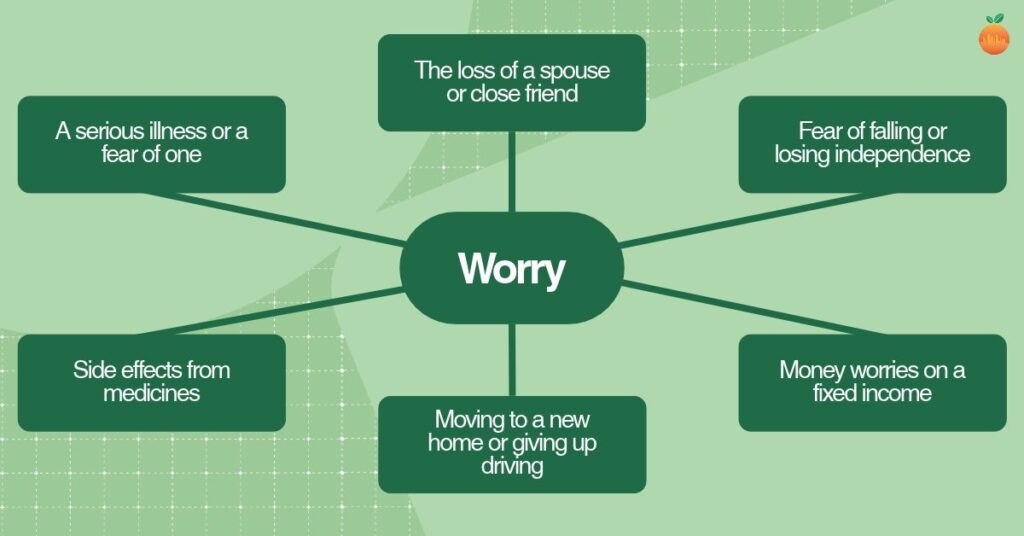
Common triggers include:
- A serious illness or a fear of one
- The loss of a spouse or close friend
- Fear of falling or losing independence
- Money worries on a fixed income
- Moving to a new home or giving up driving
- Side effects from medicines
The NIMH also names risk factors such as family history, brain chemistry, stressful events, and other conditions like depression, chronic pain, or heart problems.¹ In other words, no single cause explains it. Several pressures usually pile up.
How Can You Tell Anxiety From Dementia or Another Illness?
This is a hard question. Anxiety, depression, and early dementia can look alike. All three can cause poor sleep, trouble focusing, and withdrawal from friends.
Physical illness can mimic anxiety as well. A racing heart might come from an overactive thyroid or a heart rhythm problem. Shortness of breath might come from lung trouble. That is why a doctor’s visit comes first.
Some medicines can raise anxiety, too. Ask the doctor or pharmacist to review everything your parent takes. Our guide on medication management for seniors can help you build a clear list.
If your parent seems newly confused, call the doctor soon. Our post on UTI in elderly adults explains how infections can cause sudden changes in mood and thinking.
When Should You See a Doctor About a Parent’s Anxiety?
See a doctor if worry lasts more than a few weeks, feels uncontrollable, or interferes with sleep, eating, or daily routines. Start with a primary care provider, who can rule out medical causes and refer your parent to a psychologist, psychiatrist, or clinical social worker. Seek urgent help if your parent talks about self-harm or feels hopeless.
The NIMH recommends starting with a primary care provider. That provider can refer your family to a mental health professional.¹ ² Recognizing the signs is the first step.
If your parent talks about wanting to die, call or text 988 for the Suicide and Crisis Lifeline. Call 911 in a life-threatening emergency.² Take any such comment seriously. Stay with your parent until help arrives.
Bring notes to the appointment. Write down when the worry began and what seems to trigger it. List every medicine, vitamin, and supplement. Mention changes in sleep, appetite, and mood.
What Treatments Help Seniors With Anxiety?
Treatments for anxiety in seniors include talk therapy, medication, or both. Cognitive behavioral therapy is the most studied option and helps people challenge unhelpful thoughts. Doctors may prescribe antidepressants such as SSRIs or SNRIs, which take several weeks to work. Support groups and healthy routines help too, but a doctor should guide every plan.
Good treatments exist. The NIMH describes two main paths, and many people use both.¹
Talk Therapy
Cognitive behavioral therapy is the most studied option. It helps a person notice and question unhelpful thoughts and change habits that keep anxiety going.¹ Acceptance and commitment therapy is another choice. It encourages people to accept their thoughts, take part in meaningful activities, and practice mindfulness.¹
Therapy can happen in person or by telehealth.¹ For a homebound parent, a video visit may be easier than a trip across Palm Beach County.
Medication
Some seniors benefit from medicine. The NIMH lists antidepressants called SSRIs and SNRIs, which may take several weeks to work.¹ Benzodiazepines act quickly but can cause tolerance and dependence, so they are usually prescribed for short periods.¹ Buspirone is less likely to be addictive, but it takes three to four weeks to reach full effect.¹
Older adults can be more sensitive to side effects. Never start, stop, or change a medicine without the prescriber. Report dizziness, drowsiness, or new confusion right away.
Support Groups
Support groups can ease the sense of being alone. The NIMH notes that advice from members should be used with care and does not replace the provider’s recommendations.¹
What Can Families Do at Home to Ease Anxiety?
Families can ease anxiety at home with a steady daily routine, less caffeine, light exercise, and calm evenings. Slow breathing, regular time with friends, and a patient listener also help. These steps work alongside medical care rather than replacing it, so keep the doctor informed about any new changes in mood, appetite, or sleep.
Treatment works best with support at home. These steps are simple and gentle.
- Keep a steady daily routine with set times for meals, walks, and bed
- Cut back on caffeine, and keep evenings calm and quiet
- Encourage light exercise, such as a short walk or stretching
- Practice slow breathing together for a few minutes
- Plan a regular call or visit with friends and family
The NIMH suggests reducing caffeine, getting enough sleep, and using stress management techniques such as exercise, mindfulness, and meditation.¹ These habits help alongside treatment. They do not replace it.¹
Listen first. Do not say, “There is nothing to worry about.” That can make your parent feel dismissed. Try, “That sounds stressful. Let’s look at it together.” Then solve one small problem at a time.
Sleep matters, too. A calm bedtime routine and a regular wake-up time can ease nighttime worry.
What Should Families Avoid Saying or Doing?
Good intentions can backfire. Some common habits make anxiety worse.
- Brushing off fears with phrases like “Don’t be silly”
- Arguing about whether a worry is realistic
- Taking over every task without asking
- Offering alcohol or extra sleep aids to calm nerves
- Giving constant reassurance, which can feed the cycle
Instead, name the feeling and offer a next step. Say, “I can hear how worried you are. Let’s call the doctor together.” Calm, steady words teach calm, steady habits.
Safety also counts. An anxious parent who rushes may fall. Keep walkways clear, lights bright, and shoes sturdy. Our home safety checklist walks through each room.
How Does Loneliness Feed Worry?
Isolation and anxiety often travel together. A parent alone for most of the day has more time to dwell on fears. Small worries grow in a quiet house.
Regular company helps. A familiar face at the door gives structure to the day. Shared meals, a walk, or a card game can lift the mood. Even a short visit breaks the cycle of worry.
Families who live far away can still help. Schedule video calls at the same time each day. Ask neighbors or friends to stop by. Consider a caregiver who can offer both practical help and steady company.
How Can You Help Without Burning Out?
Caring for an anxious parent can wear you down. Their worry may become your worry. You may get calls at all hours, or feel guilty when you say no.
Set gentle limits. Agree on set call times, and rely on a written routine instead of constant reassurance. Share the load with siblings or hired help. Look after your own sleep and health. Our post on caregiver burnout lists the warning signs and ways to recover.
Asking for help is not failure. It lets you stay the calm, loving presence your parent needs.
How City Choice Home Health Care of Florida Supports Seniors Who Feel Anxious
For more than two decades, City Choice Home Health Care of Florida has supported families in Boca Raton, Delray Beach, and Boynton Beach. As a Medicare-certified agency, we have cared for more than 1,000 families.
Our team provides skilled nursing and therapy services at home, including physical, occupational, and speech therapy. Caregivers can help with bathing, dressing, meals, medication reminders, and rides to appointments. We also offer overnight or 24-hour care when needed.
A steady routine and a friendly face can ease worry, especially for seniors who spend long hours alone. Call us to talk through your options, and we will explain how home health care can fit your family’s needs.
Frequently Asked Questions
Is Anxiety a Normal Part of Aging?
No. Some worry is normal, but anxiety that is constant and hard to control is not. It is a health condition, and effective treatment is available.²
What Does Anxiety Look Like in Older Adults?
It often shows up as poor sleep, restlessness, irritability, headaches, stomachaches, or muscle tension.¹ Some seniors avoid going out or become very clingy.
Can Anxiety Cause Physical Symptoms?
Yes. The NIMH lists sweating, lightheadedness, shortness of breath, and trembling among the physical symptoms.¹ Because these can also signal heart or lung problems, a doctor should check them.
How Long Does Treatment Take?
It varies. Some medicines take several weeks to work, and buspirone can take three to four weeks.¹ Therapy often builds benefits over time. Stay patient and keep follow-up visits.
Worry Is Treatable
Anxiety in elderly adults can feel overwhelming for both parent and family. But it responds to care. Notice the signs, see the doctor, and add calm routines and company at home. With support, many seniors feel lighter, sleep better, and enjoy daily life again.
Related Articles
Medication Management for Seniors: A Practical Guide for Delray Beach Families
UTI in Elderly Adults: Why Confusion Is Often the First Sign
Caregiver Burnout: Signs, Symptoms, and How to Prevent It
Sundowning: Why Evenings Get Harder for Loved Ones With Dementia in Boca Raton
Dementia Care for Boca Raton Families
Sources
1. National Institute of Mental Health. Generalized anxiety disorder: when worry gets out of control. Accessed October 14, 2026. https://www.nimh.nih.gov/health/publications/generalized-anxiety-disorder-gad
2. National Institute of Mental Health. Older adults and mental health. Accessed October 14, 2026. https://www.nimh.nih.gov/health/topics/older-adults-and-mental-health
3. National Institute of Mental Health. Anxiety disorders. Accessed October 14, 2026. https://www.nimh.nih.gov/health/topics/anxiety-disorders