 Family Caregiver Resources
What Is Sundowning?
Sundowning is a pattern of increased confusion, anxiety, and agitation that affects many people with Alzheimer’s disease and other dementias in the late afternoon and evening. It is not a disease on its own. Rather, it is a group of symptoms that may include pacing, restlessness, suspicion, trouble sleeping, and wanting to “go home” while already at home.
Some doctors and families call it “sundowner’s syndrome” or “sundown syndrome.” The terms mean the same thing. The key feature is timing. Symptoms appear or grow worse as daylight fades, and they may last well into the night.
Estimates of how common it is vary widely. Researchers have struggled to agree on one definition, so studies count it differently. Still, most dementia specialists agree it is one of the most common behavior changes families face.
Related Study/Source: A 2011 review in Psychiatry Investigation examined decades of research on sundown syndrome. The authors found reported rates in people with dementia ranging from about 2.4% to 66%, depending on the setting and definition used. They also noted that sundowning is a leading reason families seek outside care.¹
What Time Does Sundowning Start?
Sundowning usually starts in the late afternoon or early evening, often between 4:00 p.m. and 7:00 p.m., as natural light begins to fade. The exact time differs from person to person. For some, symptoms begin right after lunch. Others see them peak after dark and continue through the night, disrupting sleep for everyone in the home.
A simple log can help you spot your loved one’s window. Write down the time restlessness begins and what happened right before it. After a week, most families see a clear pattern. That pattern becomes your roadmap.
What It Looks Like at Home
Every person is different. But certain behaviors show up again and again. Watch for these signs as the afternoon winds down:
- Pacing, fidgeting, or following you from room to room
- Asking to “go home” or insisting on leaving for a job they left years ago
- Sudden suspicion, such as accusing family of taking belongings
- Crying, yelling, or becoming upset over small things
- Seeing shadows as people or objects that are not there
- Refusing help with dinner, bathing, or getting ready for bed
- Trouble falling asleep, or waking and wandering at night
None of this is a choice. Your loved one is not being difficult on purpose. The brain changes behind dementia make the end of the day genuinely harder to process. Remembering that can take some sting out of a tough evening. Our caregivers are trained to recognize these signs before they escalate, which is often the. Difference between a hard hour and a hard night.
Why Evenings Get Harder
Nobody knows the exact cause. However, researchers point to several factors that likely work together.
A disrupted body clock. Dementia can damage the part of the brain that manages sleep and wake cycles. As a result, a person may feel drowsy at noon and wide awake at midnight.
Fading light and shadows. Dim rooms create shadows and glare. For someone with dementia, a coat on a chair can look like a stranger. That confusion quickly turns into fear.
End-of-day exhaustion. A full day of processing sights, sounds, and conversations drains mental energy. By evening, there is little reserve left to cope.
Unmet physical needs. Hunger, thirst, pain, a full bladder, or constipation can all fuel agitation. And someone with dementia may not be able to name what feels wrong.
Busy households. Late afternoon is often the loudest part of the day. Dinner prep, television, phone calls, and family arriving home all compete for attention.
Reading your stress. People with dementia often mirror the mood around them. If the caregiver is tired and rushed, that tension spreads.
How to Ease the Evening Hours
There is no single fix. Yet small, steady changes often make evenings noticeably calmer. Try one or two at a time so you can tell what works.
Build the Day Around the Morning
Schedule appointments, outings, and baths for the morning or early afternoon. That is when most people with dementia feel sharpest. Keep wake-up, meal, and bedtime hours the same every day. Predictable routines give the brain fewer surprises to manage. Our City Choice caregivers structure their vists around this exact principle. We make sure to schedule baths, outings, and appointments early in the day. All before the afternoon shift begins.
Bring In the Light
Get outside in the morning sun when possible. Boca Raton’s weather makes this easy most of the year. A short walk or time on the patio helps reset the body clock. Then, before dusk, turn on lamps throughout the house. Close blinds to cut down on shadows and window reflections. When our caregivers are in the home during morning hours, getting a client outside for even ten minutes is one of the first things they’ll suggest.
Watch the Afternoon Triggers
Limit caffeine and sugar after lunch. Offer a light snack in the mid-afternoon to head off hunger. Keep naps short and early so nighttime sleep stays intact. Also, check for pain or discomfort before assuming the behavior is “just the dementia.”
Wind Down the House
Turn off the television news in the late afternoon. Play soft, familiar music instead. Save chores and loud activities for earlier in the day. A calm, quiet home at 5:00 p.m. sends a clear signal that the day is ending.
Stay Calm When It Starts
Speak slowly and softly. Avoid arguing or correcting. If your mother wants to “go home,” ask her to tell you about home. Then gently redirect her to a simple task, like folding towels or looking at a photo album. Reassurance works far better than logic. It’s a skill for our caregivers build with practice. It’s knowing when to redirect versus when to simply sit with someone in the moment. For more on speaking in ways that respect your loved one, read our guide on elderspeak.
A Sample Evening Routine
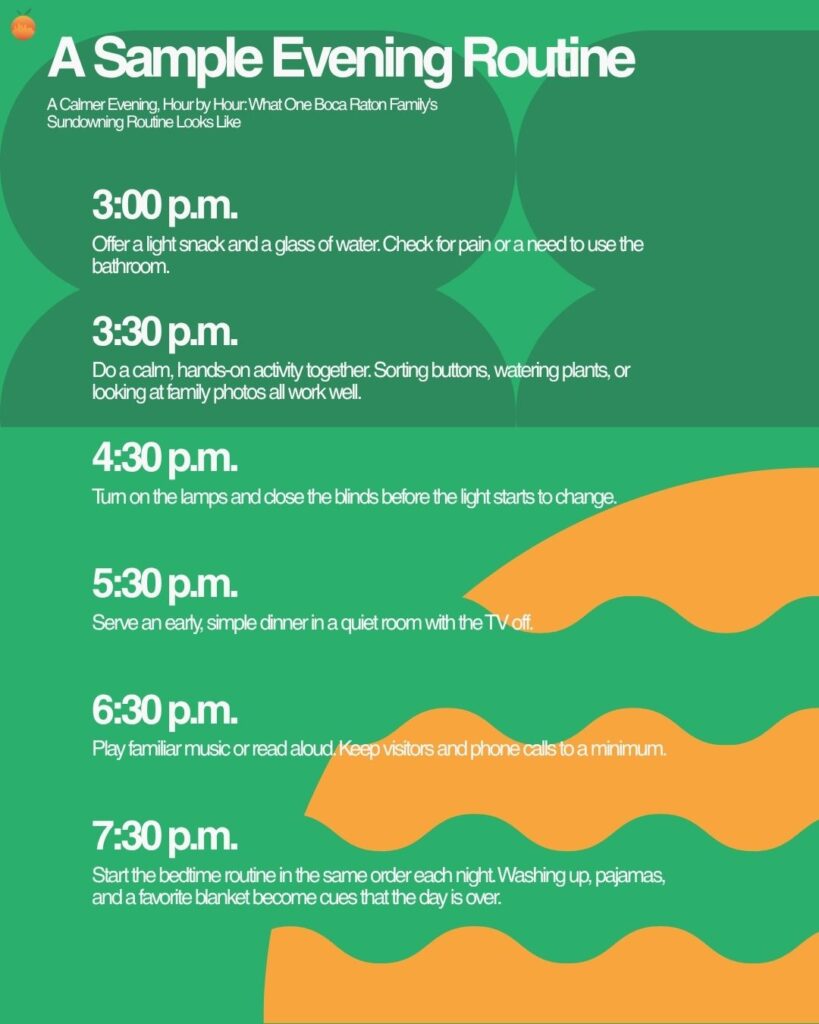
Routines work best when they are simple and repeat every day. Here is one example that many families adapt. Adjust the times to match your loved one’s natural rhythm. This is close to the kind of routine our caregivers help families put in place. We make it simple enough to repeat and flexible enough to adjust as needs change.
- 3:00 p.m. Offer a light snack and a glass of water. Check for pain or a need to use the bathroom.
- 3:30 p.m. Do a calm, hands-on activity together. Sorting buttons, watering plants, or looking at family photos all work well.
- 4:30 p.m. Turn on the lamps and close the blinds before the light starts to change.
- 5:30 p.m. Serve an early, simple dinner in a quiet room with the TV off.
- 6:30 p.m. Play familiar music or read aloud. Keep visitors and phone calls to a minimum.
- 7:30 p.m. Start the bedtime routine in the same order each night. Washing up, pajamas, and a favorite blanket become cues that the day is over.
Consistency matters more than the exact schedule. After a few weeks, the routine itself starts to feel reassuring. That familiarity is what helps.
Keeping Nights Safe
Sundowning can spill into the night. A restless person may get up, wander, or try to leave the house. That creates real safety risks, especially for someone who is already unsteady on their feet.
A few changes can lower the risk. Use plug-in night-lights in hallways and the bathroom. Clear loose rugs and cords from walking paths. Consider simple door chimes or motion sensors that alert you when someone gets up. Keep car keys and medications out of sight. Our home safety checklist walks through each room in more detail.
It also helps to plan for the worst night. Keep a recent photo of your loved one on your phone. Tell a trusted neighbor about the situation. And make sure your loved one wears some form of ID, such as a bracelet with your phone number. City Choice caregivers who provide overnight coverage are trained specifically to watch for these wandering risks, so families can actually sleep.
When It Might Be Something Else
Sometimes a sudden change in behavior is not sundowning at all. Delirium can look similar, but it comes on quickly, often over hours or days. It usually has a medical cause, such as an infection, dehydration, a new medication, or recent surgery.
Urinary tract infections are a common culprit in older adults. They may cause confusion before any other symptom appears. So, if your loved one’s evenings get dramatically worse in a short time, call their doctor. A review of current medications is also worth asking about. Certain sleep aids and allergy drugs can make evening confusion worse.
Caring for the Caregiver in Boca Raton
Evening episodes take a real toll on families. The hours between dinner and bedtime can feel endless. And when sleep suffers at night, the next day starts at a deficit.
Many caregivers push through for months before asking for help. That is understandable, but it is not sustainable. Exhaustion makes it harder to stay calm, and a tense caregiver can make sundowning worse. It becomes a cycle.
Watch for the warning signs of caregiver burnout in yourself. Irritability, trouble sleeping, and feeling constantly on edge are common early signals. Taking a break is not giving up. It is how you keep going. We’ve had families tell us that just having a second set of hands for a few evening a week was what let them start sleeping through that night again.
How City Choice Helps Boca Raton Families
City Choice Home Health Care has supported families across Boca Raton, Delray Beach, and Boynton Beach for more than two decades. We are Medicare-certified, and our team has served more than 1,000 families. Many of them came to us because evenings at home had become too much to handle alone.
Our caregivers are trained to work with people living with dementia. They understand how to read early signs of agitation and how to redirect without conflict. We can build a care plan around your loved one’s hardest hours, including late afternoon and overnight coverage.
Here is how that support can look:
- A consistent caregiver who learns your loved one’s routine and triggers. We’re talking about whether that’s a certain sound, a particular time of the day, or a routine that’s been disrupted.
- Help with dinner, bathing, and bedtime so evenings stay calm and predictable
- Overnight support for families whose loved one wakes and wanders
- Coordination with doctors when behavior changes suddenly
If you are unsure whether it is time for help, our guide to dementia care for Boca Raton families is a good place to start. Or simply call us. We will talk through what your evenings look like and what might help.
Frequently Asked Questions
What Is Sundowners Syndrome?
Sundowners syndrome is another name for sundowning, a set of behavior changes that appear in people with dementia during the late afternoon and evening. Common signs include confusion, agitation, anxiety, pacing, and trouble sleeping. It is not a separate diagnosis. Doctors identify it by when the symptoms happen, since no blood test or brain scan can confirm it.
Can Sundowning Happen Without Dementia?
Yes, although it is less common. Older adults recovering from surgery or a long hospital stay sometimes show similar evening confusion. Our article on anesthesia and older adults covers this in more detail. If evening confusion appears in someone without a dementia diagnosis, talk to a doctor promptly.
Does It Get Worse Over Time?
Symptoms often peak in the middle stages of dementia. In later stages, they may ease as a person becomes less active. That said, every case is different. Tracking behavior over time gives you and the care team the clearest picture.
Can Medication Help?
In some cases, a doctor may suggest medication. But most experts recommend trying routine, lighting, and environmental changes first. Some drugs used for agitation carry serious risks for older adults. Always talk with your loved one’s doctor before starting anything new, including over-the-counter sleep aids. Our care team can also help track patterns over time, so you and the doctor have real information to work from rather than guesswork.
Should I Correct My Loved One When They Are Confused?
Usually, no. Correcting someone in the middle of an episode tends to raise their anxiety. Instead, meet them where they are. Acknowledge the feeling, offer comfort, and gently shift their attention.
Evenings Can Get Easier
Sundowning is hard, but it is not hopeless. Most families find that routine, light, and a calm home make a real difference. And you do not have to manage every evening alone. When you are ready, City Choice is here to help your family find a steadier rhythm. We’ve walked this exact evening with a lot of Boca Raton families. You don’t have to figure it out from scratch.
Related Articles
- Dementia Care for Boca Raton Families
- When Your Mother Is in Denial About Dementia
- Caregiver Burnout: Signs, Symptoms, and How to Prevent It
- What Is Elderspeak?
- 24/7 Home Care in Boynton Beach
Sources
- Khachiyants N, Trinkle D, Son SJ, Kim KY. Sundown syndrome in persons with dementia: an update. Psychiatry Investig. 2011;8(4):275-287. doi:10.4306/pi.2011.8.4.275
- National Institute on Aging. Tips for coping with sundowning. Accessed September 23, 2026. https://www.nia.nih.gov/health/tips-coping-sundowning
- Alzheimer’s Association. Sleep issues and sundowning. Accessed September 23, 2026. https://www.alz.org/help-support/caregiving/stages-behaviors/sleep-issues-sundowning
- Cleveland Clinic. Sundown syndrome. Accessed September 23, 2026. https://my.clevelandclinic.org/health/articles/22840-sundown-syndrome