 Family Caregiver Resources
Open your parent’s kitchen cabinet and count the bottles. For many families, the number is surprising. A heart pill in the morning. Something for blood pressure at lunch. Another for sleep at night. Plus vitamins, a pain reliever, and eye drops that are easy to forget.
Keeping all of that straight is hard for anyone. For an older adult with vision changes, memory lapses, or several doctors, it can become risky. This guide covers medication management for seniors, including the most common mistakes, simple systems that work, and when to bring in help at home in Delray Beach.
What Is Medication Management?
Medication management is the process of making sure a person takes the right medicines, at the right doses, at the right times. For seniors, it includes keeping an updated medication list, organizing pills, tracking refills, watching for side effects and drug interactions, and sharing information among doctors and pharmacists. The goal is safer treatment with fewer mistakes.
Good medication management is not just about remembering pills. It is also about asking whether every medicine is still needed. Over the years, prescriptions tend to pile up. Some may no longer help, and a few may even cause harm.
Why It Matters So Much for Older Adults
Aging changes how the body handles medicine. The liver and kidneys clear drugs more slowly. Body fat and water levels shift. As a result, a dose that was fine at 50 may be too strong at 80.
At the same time, older adults tend to take more medications. Many see several specialists, and each one may prescribe something new. Taking five or more medicines at once is called polypharmacy. It raises the risk of side effects, interactions, and mistakes.
Related Study/Source: A 2015 study in the Journals of Gerontology tracked medication use among Americans age 65 and older. The share taking five or more prescription drugs rose from 24% in 1988 to 39% by 2010.¹ In a separate study, researchers estimated nearly 100,000 emergency hospitalizations each year among older Americans due to medication problems.²
Many of these hospitalizations involve common drugs. Blood thinners, insulin, and diabetes pills top the list. So careful medication management for seniors is one of the most effective ways to prevent a trip to the ER.
Common Medication Mistakes at Home
Most errors are not dramatic. They are small slips that add up over time. Watch for these:
- Forgetting a dose, then doubling up to “catch up”
- Taking the same drug twice under a brand name and a generic name
- Stopping a medicine early because they feel better
- Splitting or crushing pills that should be swallowed whole
- Mixing prescriptions with over-the-counter drugs or supplements that interact
- Using old prescriptions left over from a past illness
- Misreading small print on labels
- Skipping pills to save money
Any of these can lead to dizziness, falls, confusion, or worse. The good news is that most are preventable with a simple system.
Warning Signs of a Medication Problem
Sometimes the first clue is a change in how your loved one looks or acts. Side effects in older adults often look like “just getting older.” Call the doctor or pharmacist if you notice:
- New confusion, memory trouble, or drowsiness
- Dizziness or unsteadiness, especially when standing
- Falls with no clear cause
- Loss of appetite, nausea, or constipation
- Unusual bruising or bleeding
- Mood changes, such as anxiety or depression
- Pill counts that do not add up
Timing is a helpful clue. If a change started soon after a new prescription or dose change, mention it right away.
Build a Simple System at Home
The best system is one your loved one can actually follow. Start with these steps.
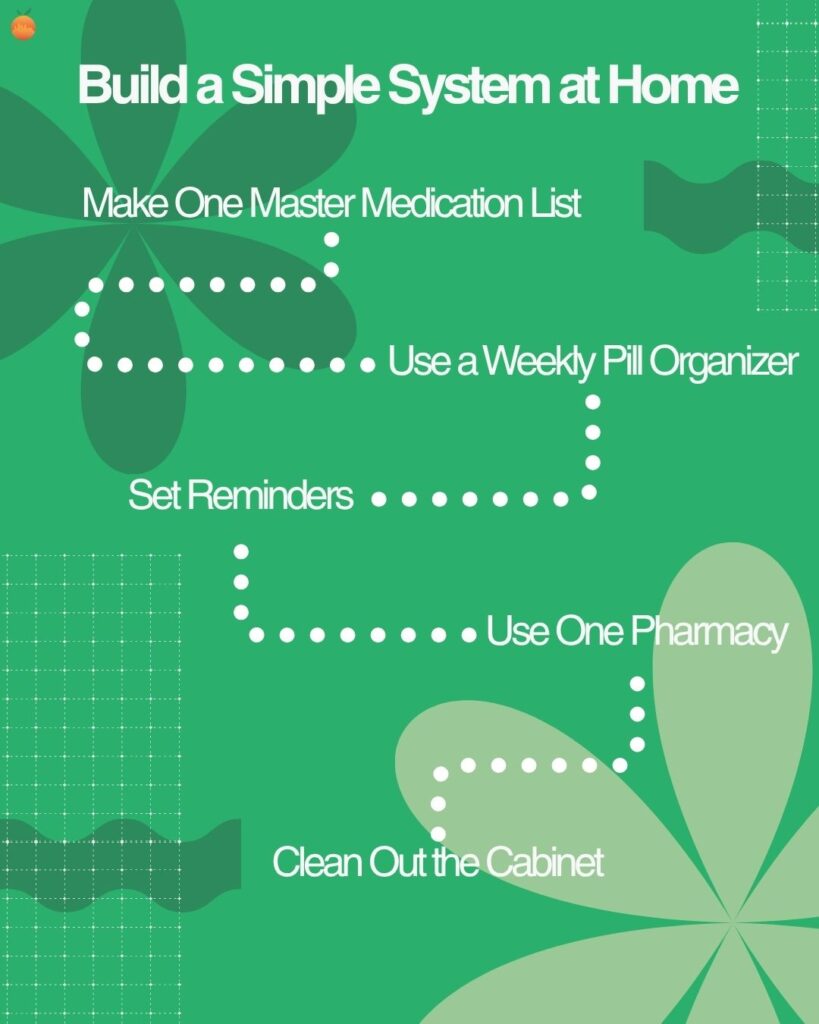
Make One Master Medication List
Write down every medicine your loved one takes. Include prescriptions, over-the-counter drugs, vitamins, herbal supplements, inhalers, creams, and eye drops. For each one, note the dose, the time, the reason, and the prescribing doctor. Keep a copy on the fridge and another in your wallet or phone.
Use a Weekly Pill Organizer
A labeled organizer with morning, midday, evening, and bedtime sections makes daily doses clear. Fill it once a week at the same time. Automatic pill dispensers with alarms and locking lids can help people with memory loss.
Set Reminders
Phone alarms, smart speakers, or a simple kitchen timer can prompt each dose. Tie doses to daily habits, like breakfast or brushing teeth. Routines make remembering easier.
Use One Pharmacy
Filling every prescription at one pharmacy lets the pharmacist check for interactions. Many pharmacies also offer blister packs, synchronized refill dates, and delivery. Ask what yours provides.
Clean Out the Cabinet
Remove expired medicines and old prescriptions that are no longer used. Many pharmacies and police stations have safe drop-off boxes. Fewer bottles mean fewer chances for mix-ups.
Medication Safety in the Florida Heat
South Florida adds its own twist. Heat and humidity affect both people and pills.
Several common medicines raise the risk of dehydration or heat illness. Water pills, some blood pressure drugs, certain antidepressants, and some Parkinson’s medications can all make it harder for the body to cool down. So on hot days, your loved one may need extra fluids and closer watching. Ask the doctor whether any current prescriptions call for special care in summer.
Storage matters too. Many medicines break down when they get too hot or damp. That makes the bathroom cabinet one of the worst places to keep them. A cool, dry kitchen cabinet away from the stove works better. And never leave medications in a parked car, where temperatures in Delray Beach can climb fast.
Insulin and some liquid medicines have their own storage rules. Check the label or ask the pharmacist.
Ask for a Full Medication Review
At least once a year, ask the doctor or pharmacist to review every medication together. Some families call this a “brown bag” review. You simply gather every bottle into a bag and bring it to the appointment.
During the review, ask these questions:
- Is each medicine still needed?
- Could any doses be lowered?
- Do any of these drugs interact with each other?
- Are any on the list of medications that are riskier for older adults?
- Could a side effect explain any new symptoms?
That fourth question matters. The American Geriatrics Society publishes the Beers Criteria, a list of drugs that often carry extra risks for seniors.³ Common examples include certain sleep aids, some allergy medicines, and muscle relaxants. Doctors can often suggest safer alternatives.
Also, many people with Medicare Part D qualify for a free Medication Therapy Management program. It includes a full review with a pharmacist. Call the plan to ask whether your loved one is eligible.
Questions to Ask About Every New Prescription
Each new medicine is a chance to prevent problems before they start. Before leaving the doctor’s office or pharmacy counter, ask:
- What is this medicine for, and how will we know it is working?
- When and how should it be taken, with food or without?
- What side effects should we watch for?
- Does it interact with anything else on the list?
- How long will it be needed?
Write the answers on the master list. Over time, these notes become one of the most useful tools in medication management for seniors, especially when several doctors are involved.
After a Hospital Stay: The Highest-Risk Moment
Hospital discharge is when medication mistakes are most common. New prescriptions get added. Old ones may be stopped or changed. And the family is often handed a stack of papers during a stressful moment.
Before leaving the hospital, ask for a clear list of which medicines to start, stop, or change. Then compare it with the list at home. Throw out or set aside anything that has been discontinued. Call the doctor within a few days if anything is unclear.
Our guide on what happens after hospital discharge explains why the first weeks home matter so much.
Medication Management for Seniors With Dementia
Memory loss changes everything about medication routines. A person with dementia may insist they already took a pill when they did not. Or they may take a dose, forget, and take it again. Some refuse medicines they no longer recognize.
A few strategies help. Keep all medications locked or out of sight, and hand out only the current dose. Use the same cup, time, and place every day. Pair pills with a favorite snack or drink. And if your loved one refuses, stay calm and try again in a little while rather than arguing.
Some medicines come in easier forms, such as liquids, patches, or once-daily versions. Ask the doctor or pharmacist whether any switches make sense. Simplifying the schedule is often the single most helpful change.
When a Parent Resists Help
Many older adults guard their independence closely, and medicine can feel deeply personal. Offering help may be met with “I’ve been doing this for years.”
Start small. Offer to fill the pill organizer together, rather than taking over. Frame changes as making life easier, not as a sign of decline. Our article on when a parent won’t accept help offers more ways to approach the conversation.
When It Is Time for Extra Help
Some seniors manage their own medications well for years. Others need support sooner. Consider bringing in help if your loved one:
- Has missed doses or taken extra pills more than once
- Lives with memory loss or dementia
- Takes many medicines on complex schedules
- Uses injections, inhalers, or eye drops that are hard to manage
- Has poor vision or shaky hands
- Recently came home from the hospital
Needing help is not a failure. It is a smart way to protect independence for longer.
How City Choice Supports Medication Management in Delray Beach
City Choice Home Health Care has served families in Delray Beach, Boca Raton, and Boynton Beach for more than two decades. Our Medicare-certified team has cared for over 1,000 families. We know that safe medication routines are a foundation of staying well at home.
Support depends on your loved one’s needs:
- Caregivers can give medication reminders, help with daily routines, and notice changes in mood, sleep, or appetite.
- Skilled nurses can review medications, teach families about new prescriptions, monitor for side effects, and coordinate with doctors.
Florida has clear rules about which tasks each type of caregiver can perform. Our article on what home health aides can and can’t do explains the difference. When skilled nursing is medically necessary, Medicare may cover it. Our guide on skilled nursing at home covers the details.
If you are worried about how your parent is handling their medications, call us. We can talk through what you are seeing and what kind of support fits.
Frequently Asked Questions
What Is the Most Common Medication Mistake Seniors Make?
Missing doses is among the most common. Taking a double dose to make up for a missed one is another frequent and risky error. A pill organizer and daily reminders help prevent both.
Can a Home Health Aide Give Medications?
Aides can usually remind your loved one to take medications and help with self-administration. More complex tasks, like injections or managing medication changes, typically require a licensed nurse. Rules vary, so ask the agency what its staff can do.
How Many Medications Is Too Many?
There is no single number. However, taking five or more medicines raises the risk of interactions and side effects. A yearly review helps make sure every medicine still earns its place.
Should Seniors Stop Taking Supplements?
Not necessarily. But supplements can interact with prescriptions. Always list them on the medication record and ask the doctor or pharmacist whether they are safe.
Small Systems, Big Protection
Medication management for seniors does not have to be complicated. One accurate list, one pharmacy, one pill organizer, and a yearly review can prevent many problems. And when routines become too hard to manage alone, extra help at home can keep your loved one safe.
Related Articles
- What Home Health Aides Can and Can’t Do
- Skilled Nursing at Home: What Medicare Will and Won’t Cover
- What Happens After Hospital Discharge
- Fear of Falling in Delray Beach
- Home Safety Checklist for Aging in Place
Sources
- Charlesworth CJ, Smit E, Lee DSH, Alramadhan F, Odden MC. Polypharmacy among adults aged 65 years and older in the United States: 1988-2010. J Gerontol A Biol Sci Med Sci. 2015;70(8):989-995. doi:10.1093/gerona/glv013
- Budnitz DS, Lovegrove MC, Shehab N, Richards CL. Emergency hospitalizations for adverse drug events in older Americans. N Engl J Med. 2011;365(21):2002-2012. doi:10.1056/NEJMsa1103053
- 2023 American Geriatrics Society Beers Criteria Update Expert Panel. American Geriatrics Society 2023 updated AGS Beers Criteria for potentially inappropriate medication use in older adults. J Am Geriatr Soc. 2023;71(7):2052-2081. doi:10.1111/jgs.18372