 Family Caregiver Resources
A fall in the kitchen. An ambulance ride. Then a surgeon explains that your mother has broken her hip. Everything changes in a day. Hip fracture recovery is a long road, and families often feel unprepared.
This guide walks through what happens in the hospital, what recovery looks like at home, and the complications to watch for. It also explains how to prepare the house and support your loved one every step of the way.
What Is a Hip Fracture and Why Is It So Serious?
A hip fracture is a break in the upper part of the thighbone, usually caused by a fall in an older adult. It is serious because it can lead to loss of independence, long bed rest, and complications such as blood clots or pneumonia. Most hip fractures need surgery, followed by weeks or months of rehabilitation.
The American Academy of Orthopaedic Surgeons says more than 300,000 people in the United States sustain a hip fracture each year. Most are adults 65 or older injured in household or community falls.¹ Hip fractures can cause disability and loss of independence.¹
Related Study/Source: The Centers for Disease Control and Prevention reports that falls cause 88% of emergency visits and hospitalizations for hip fractures among older adults, and 83% of hip fracture deaths. In 2019, nearly 319,000 older adults went to the emergency department with a hip fracture, and about 290,000 were hospitalized.²
What Are the Signs of a Broken Hip?
A broken hip usually announces itself. The AAOS lists these signs:¹
- Sudden, severe pain, usually in the groin or upper thigh
- Being unable to stand, bear weight, or move the upper leg
- An injured leg that looks shorter and turned outward
- Bruising on the outer hip or thigh
Some breaks hurt less at first, and the person may still walk.¹ Do not wait. Any hip pain after a fall needs a medical exam.
How Is a Hip Fracture Treated?
Most hip fractures need surgery, ideally within 24 to 48 hours.¹ Before surgery, the care team makes sure the patient is medically stable. Blood thinners may need time to wear off.¹
Surgery depends on where the bone broke. The AAOS describes these common approaches:¹
- Pins, screws, or a plate and screw device to hold a small crack in place
- Partial hip replacement (hemiarthroplasty) for many displaced breaks in older patients
- Total hip replacement in select patients
- A sliding hip screw or a rod placed inside the bone for breaks lower in the thighbone
Surgeons choose the method based on age, health, and activity level. Ask the surgeon to explain the plan in plain words, and write down the weight-bearing rules.
What Happens in the Hospital After Surgery?
Recovery starts almost at once. The AAOS notes that most patients get out of bed and begin physical therapy the day after surgery.¹ Antibiotics are given for 24 hours after the operation.¹
Blood thinners are usually prescribed to prevent clots, and compression boots may be used in bed.¹ Pain medicine starts through an IV, then switches to oral options.¹ The AAOS warns that opioids carry risks, so they should be used only as directed and for as short a time as possible.¹
Weight-bearing limits depend on the repair. Patients with a hip replacement can usually put full weight on the leg right away unless complications occur.¹ Always follow the surgeon’s instructions.
What Does Hip Fracture Recovery Look Like at Home?
Hip fracture recovery at home usually involves daily exercises with a physical therapist, help with bathing, dressing, and moving around, and careful pain and medicine management. Most people improve over weeks to months, though full recovery varies. Early movement and rehabilitation have been shown to improve long-term results, so staying active within the surgeon’s limits is key.
The AAOS explains that some patients go home with in-home physical therapy, while others go to a rehabilitation facility until they can walk independently and manage daily activities.¹ Therapists teach exercises, weight-bearing limits, and tasks like bathing and dressing.¹
The AAOS also says early movement and rehabilitation have been shown to improve long-term results.¹ Progress can feel slow. Celebrate small wins, such as standing at the counter or walking to the mailbox.
For a deeper look at the transition home, see our post on what happens after hospital discharge.
How Long Does It Take to Recover After a Hip Fracture?
Recovery after a hip fracture usually takes weeks to months. Most patients begin walking with support within days of surgery, then build strength through therapy. Many regain much of their mobility, though some older adults need ongoing help with daily tasks. Pace depends on age, overall health, the type of repair, and steady therapy.
Progress rarely moves in a straight line. A good week may be followed by a tired one. The AAOS notes that older adults often need more help after the fracture and may experience a step-by-step drop in function.¹ Plan for that possibility, and ask the care team what to expect for your loved one.
Set realistic goals. Walking to the bathroom alone is a big win. So is dressing without help. Write down each milestone, and share it with the therapist.
How Can You Prepare the Home Before Discharge?
A safe home speeds healing and prevents a second fall. Start before the hospital stay ends.
- Set up a bed or chair on the main floor if stairs are a problem
- Remove loose rugs, cords, and clutter from walkways
- Add night lights from the bedroom to the bathroom
- Install grab bars and a raised toilet seat
- Use a shower chair and non-slip mat
- Place the phone, water, and medicines within easy reach
- Arrange a walker or cane as ordered
Our home safety checklist covers each room in detail. Do a walk-through with the therapist if possible.
What Complications Should Families Watch For?
Recovery is not always smooth. The AAOS names blood clots, pneumonia, and bed sores as risks, especially with prolonged bed rest.¹ In very old patients, long bed rest can cause disorientation, which makes recovery harder.¹ Deconditioning, meaning weakness from inactivity, is another concern.¹
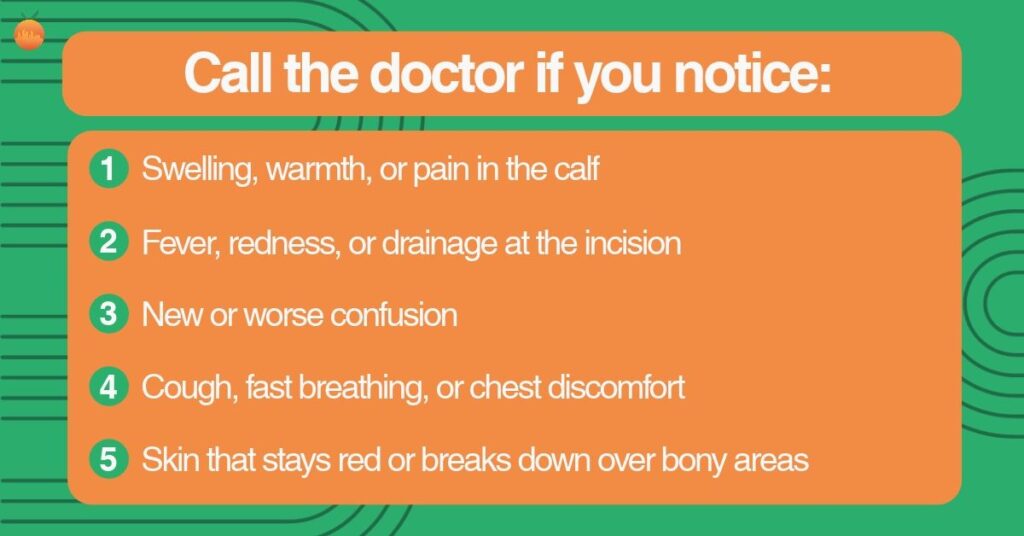
Call the doctor if you notice:
- Swelling, warmth, or pain in the calf
- Fever, redness, or drainage at the incision
- New or worse confusion
- Cough, fast breathing, or chest discomfort
- Skin that stays red or breaks down over bony areas
Call 911 for sudden trouble breathing, chest pain, or fainting. Blood clots can travel to the lungs, which is an emergency.
Confusion after surgery is common in older adults. Our guide to anesthesia and older adults explains what to watch for.
How Does Physical Therapy Help Hip Fracture Recovery?
Physical therapy helps hip fracture recovery by rebuilding strength, balance, and confidence. A therapist teaches safe ways to stand, walk, climb stairs, and get in and out of bed. Exercises start gently and advance as healing allows. Regular practice at home prevents stiffness and reduces the risk of another fall, which is a major concern.
Therapy usually begins the day after surgery and continues for weeks.¹ Expect exercises for the hip, thigh, and core. Walking practice starts with a walker or cane.
Daily tasks matter too. Occupational therapy helps with bathing, dressing, and kitchen tasks using adaptive tools. Our post on in-home occupational therapy explains what it offers.
Consistency is everything. Short sessions several times a day usually beat one long session. Encourage, but never push through sharp pain.
How Can Families Support Pain Control and Medicines?
Pain makes movement harder. Follow the prescribed plan, and keep a written schedule. The AAOS cautions that opioids carry risks of addiction and harm.¹ Use them as directed and for as short a time as possible.¹
Watch for drowsiness, constipation, and confusion. Constipation is common after surgery and with pain medicine. Tell the doctor about any side effects.
Keep a clear list of every medicine, including blood thinners. Our guide to medication management for seniors can help.
How Can Good Nutrition Support Healing?
Bones and muscles need fuel to heal. Offer regular meals with protein, such as eggs, fish, beans, or yogurt. Add fruits, vegetables, and whole grains. Keep fluids available through the day.
Appetite can drop after surgery. Smaller, more frequent meals may work better. If your loved one stops eating, tell the doctor.
How Can You Prevent Another Fall and Another Fracture?
The risk of a second fall is real. Osteoporosis weakens bone, according to the AAOS, and most fractures in older adults come from falls.¹ Ask the doctor about bone health, including whether a bone density test or treatment makes sense.
Review medicines that cause dizziness or drowsiness. Check vision and footwear. Keep up with strengthening and balance exercises. The CDC says falls can be prevented, and recommends a medicines review as one step.³
Make safe habits automatic. Use the walker every time. Turn on lights at night. Sit to dress. Small routines protect the hip that just healed.
What Should Caregivers Avoid?
Good intentions can slow healing. Avoid doing everything for your loved one. Too much help leads to weakness and fear. Avoid rushing, too. Pushing past the therapist’s limits can cause setbacks.
Follow the weight-bearing rules closely. Never ignore new pain, swelling, or fever. And do not forget yourself. Caregiving after surgery is demanding, and you need rest and backup. Our post on caregiver burnout lists the warning signs.
What About Emotional Recovery?
A broken hip hits the mind as well as the body. Many seniors fear falling again. Some feel sad about losing independence. Others become anxious or withdrawn.
Listen. Acknowledge the fear. Offer steady encouragement and set small goals together. If sadness or worry lingers, tell the doctor. Treatment helps.
How City Choice Home Health Care of Florida Supports Hip Fracture Recovery
For more than two decades, City Choice Home Health Care of Florida has supported families in Delray Beach, Boynton Beach, and Boca Raton. As a Medicare-certified agency, we have cared for more than 1,000 families.
Our team provides skilled nursing and therapy services at home, including physical, occupational, and speech therapy. Caregivers can help with bathing, dressing, meals, medication reminders, and rides to appointments. We also offer overnight or 24-hour care when needed.
Therapy visits, hands-on help with daily tasks, and a calm routine can make recovery at home feel more manageable. Call us to talk through your options, and we will explain how home health care can fit your family’s needs.
Frequently Asked Questions
How Long Does Hip Fracture Recovery Take?
It varies by person and by type of surgery. Many people improve over weeks to months. Rehabilitation can continue longer, and some older adults need more daily help afterward.¹
When Can Someone Walk After Hip Surgery?
Many patients stand with a therapist the day after surgery.¹ Weight-bearing limits depend on the repair, so follow the surgeon’s orders closely.¹
Can Someone Recover at Home After a Hip Fracture?
Often, yes. The AAOS notes that some patients go home with in-home physical therapy.¹ Others first spend time in a rehabilitation facility.¹ The care team helps decide.
What Are the Risks If Someone Stays in Bed Too Much?
Long bed rest raises the risk of blood clots, pneumonia, bed sores, and weakness.¹ Early movement within the surgeon’s limits is key.
One Step at a Time
Hip fracture recovery takes patience. Expect progress in small steps, with good days and slow ones. Prepare the home, follow the therapy plan, and watch for complications. With steady help, many seniors regain confidence and return to the things they love.
Related Articles
What Happens After Hospital Discharge: Why Home Care Is the Next Step
In-Home Occupational Therapy: What It Is and Who It’s For
Home Safety Checklist for Aging in Place
Anesthesia and Older Adults: What Families Should Watch For After Surgery
Skilled Nursing at Home: What Medicare Will and Won’t Cover
Sources
1. American Academy of Orthopaedic Surgeons. Hip fractures. OrthoInfo. Accessed October 14, 2026. https://www.orthoinfo.org/diseases–conditions/hip-fractures
2. Moreland BL, Legha JK, Thomas KE, Burns ER. Hip fracture-related emergency department visits, hospitalizations and deaths by mechanism of injury among older adults in the United States, 2019. J Aging Health. 2023;35(5-6):345-355. doi:10.1177/08982643221132450. Accessed November 12, 2026. https://stacks.cdc.gov/view/cdc/126881/cdc_126881_DS1.pdf
3. Centers for Disease Control and Prevention. Older adult fall data and statistics. Accessed October 14, 2026. https://www.cdc.gov/falls/data-research/facts-stats/index.html