 Senior Health Wellness
If your elderly parent is not eating, start by looking for the cause. Appetite drops for many reasons, and many can be treated. Medications, mouth pain, low mood, and illness are common culprits. Small changes at the table often help, and a doctor’s visit is wise when weight starts to fall.
Watching a parent push away a plate is painful. You worry, you coax, and you wonder what you missed. This guide explains why an elderly parent not eating is so common, when to call the doctor, and what helps at home. It is written for families in Boynton Beach, Delray Beach, and Boca Raton.
Why Is Your Elderly Parent Not Eating?
An elderly parent not eating often has an underlying cause, such as medications, dental or swallowing problems, depression, loneliness, or illness. Appetite also fades naturally with age, as taste and smell weaken and the stomach empties more slowly. Finding the cause is the first step, because many of these problems respond well to treatment.
Rarely is there a single reason. Most families find two or three small problems stacked together. A sore tooth, a new pill, and a quiet house can add up to skipped meals. So it helps to look at the whole picture instead of the plate alone.
Related Study/Source: A University of Florida extension fact sheet explains that lack of appetite may result from disease conditions, medications, loneliness, or depression. It also lists chewing and swallowing problems, dry mouth, and difficulty shopping or preparing food as common barriers.¹
Is It Normal for Older Adults to Eat Less?
Yes, a small drop in appetite is common with age, but eating much less, skipping meals for days, or losing weight is not normal. Aging weakens taste and smell, slows stomach emptying, and lowers hunger signals. A sudden or steady decline deserves a prompt doctor’s visit, because it can point to a problem that is often treatable.
The Merck Manual notes that normal age-related changes include reduced appetite signaling, slower stomach emptying, and weaker taste and smell.² Muscle loss adds to the problem. Less muscle means a lower need for calories, and less eating can speed muscle loss further. The cycle feeds itself.
That is why small signs matter. Notice what your parent ate last week compared with last month. Even a mental note helps when you talk to the doctor.
Common Causes of Appetite Loss
Medications and Medical Conditions
Many prescriptions dull appetite or change taste. Others cause nausea or dry mouth. Illness can also lower hunger, from infections to heart, lung, or digestive problems. Ask the doctor or pharmacist to review every medicine your parent takes. Our guide on medication management for seniors shows how to keep that list organized.
Mouth, Chewing, and Swallowing Problems
Sore gums, loose dentures, and dry mouth make eating unpleasant. Stroke, dementia, and nerve conditions can also affect chewing and swallowing.¹ If your parent coughs or clears the throat during meals, tell the doctor. A speech-language pathologist can assess swallowing. Our post on speech therapy at home explains what that visit involves.
Mood, Loneliness, and Memory Loss
Depression and loneliness can shrink appetite quickly. So can the loss of a spouse, since cooking and sharing meals were once part of daily life. Dementia adds another layer. A parent may forget to eat or no longer recognize hunger. Read more in our guide to dementia care for Boca Raton families.
Everyday Barriers
Sometimes the reason is practical. Shopping is hard, cooking feels tiring, or money is tight.¹ Your parent may also be eating alone, which makes meals less appealing. These barriers are easier to fix than most people expect.
When Should You Worry About Weight Loss?
Doctors generally become concerned when an older adult loses more than about 10 pounds, or 5 percent of body weight in a smaller person, over a few months without trying. Call the doctor sooner if weight loss comes with fever, night sweats, shortness of breath, bone pain, or heavy thirst. Do not wait for a crisis.
The Merck Manual explains that people with warning signs should see a doctor right away.² Those without warning signs should still be seen, though a delay of about a week is typically not harmful.² Warning signs include:
- Fever or night sweats
- Bone pain
- Shortness of breath, cough, or coughing up blood
- Excessive thirst and increased urination
Unplanned weight loss also carries risks of its own. The University of Florida fact sheet links it to functional decline and a higher fracture risk in older women.¹ It can also signal an undiagnosed illness.¹ Weigh your parent every week or two on the same scale and write the number down.
How Can You Get an Elderly Parent to Eat More?
Offer small, frequent meals instead of three large ones, and choose foods that pack protein and calories into each bite, such as eggs, full-fat dairy, nut butter, and soft, tender meats. Eat together when you can, keep favorite foods within easy reach, and ask the doctor to check dentures and any medications that may dull appetite.
The University of Florida fact sheet recommends eating enough calories and adding more high-protein foods, such as meat, poultry, seafood, eggs, and dairy. Plant proteins like beans, nuts, and seeds also help. It suggests snacks or nutritional supplements between meals, and full-fat dairy over low-fat.¹ Here are practical ways to put that into action:
- Serve five or six small meals instead of three big ones
- Add protein to favorite foods, like eggs in soup or nut butter on toast
- Keep snacks visible, such as yogurt, cheese, and fruit
- Make the table pleasant with good light, music, and company
- Use flavor, since taste fades with age, and season food well
- Ask about nutritional supplements before starting any
Timing matters too. Many seniors feel hungriest in the morning, so make breakfast count. Others do better with a big midday meal. Follow your parent’s rhythm instead of the clock.
What Does a Day of Small Meals Look Like?
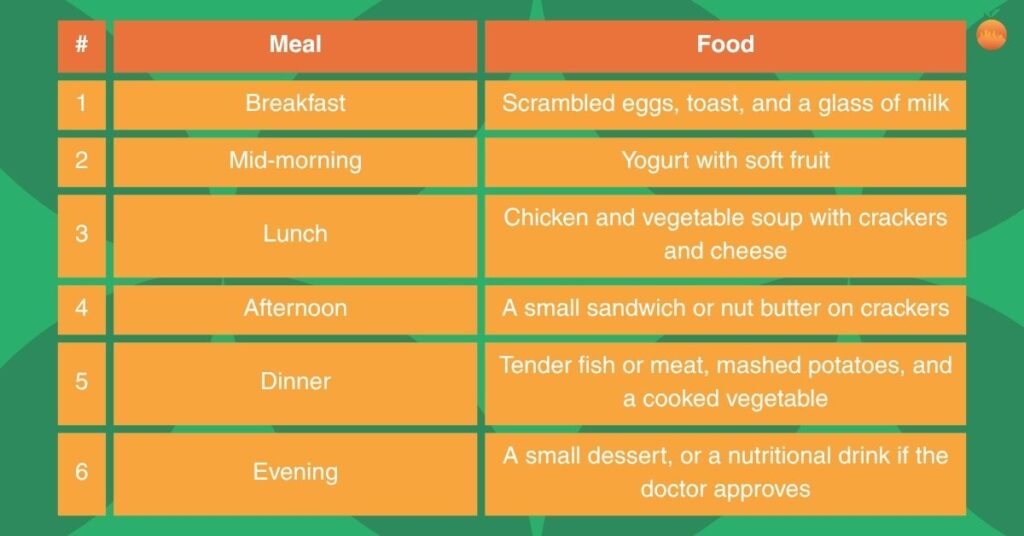
A simple plan can make eating feel less like a chore. Here is one example. Adjust it to your parent’s tastes, diet needs, and doctor’s advice:
- Breakfast: Scrambled eggs with toast and a glass of milk
- Mid-morning: Yogurt with soft fruit
- Lunch: Chicken and vegetable soup with crackers and cheese
- Afternoon: A small sandwich or nut butter on crackers
- Dinner: Tender fish or meat with mashed potatoes and a cooked vegetable
- Evening: A small dessert, or a nutritional drink if the doctor approves
Notice what your parent actually finishes. Write it down for a week. Patterns show up quickly, such as a strong breakfast and a weak dinner. Then build around the strong meals.
Texture matters too. Some parents manage soft foods better than dry or tough ones. Moist, tender foods are easier to chew and swallow. If chewing is painful, a dentist visit may solve the problem faster than any recipe.
What If Your Parent Refuses to Eat?
Refusal feels personal, but it rarely is. Your parent may feel nauseated, afraid of choking, or tired of being watched. Others want some control over something in life. Pushing harder often backfires. Instead, ask gentle questions and try again later.
Never force food or drink. If swallowing looks unsafe, stop and call the doctor. When stubbornness seems new or strong, our post on dealing with irrational elderly parents offers calm ways to respond. For parents with memory loss, simple choices, familiar foods, and a quiet room usually work best.
Not Eating Often Means Not Drinking
Low appetite and low fluid intake go hand in hand. In South Florida’s heat, that combination is risky. Dehydration can cause confusion, dizziness, and weakness, which lower appetite even more. Offer drinks through the day and serve water-rich foods like soup, melon, and yogurt. Our dehydration guide for Boynton Beach families covers the warning signs and daily habits.
Confusion or a sudden change in eating can also signal an infection. Our post on UTI in elderly adults explains why.
When Reduced Eating Is Part of a Larger Illness
Sometimes a parent with a serious or advancing illness eats less as the body slows. This is a different situation. It calls for a conversation about comfort and goals, not only calories. Talk with the care team about what matters most to your parent. Our guide to palliative care vs. hospice explains the supports available at home.
Caring for Yourself While You Worry
Mealtime struggles wear caregivers down. Guilt creeps in, and so does frustration. Both are normal. Share the load, ask family to take turns at meals, and give yourself credit for small wins. Our post on caregiver burnout explains the signs and how to prevent it.
How City Choice Home Health Care of Florida Helps Families
For more than two decades, City Choice Home Health Care of Florida has supported families in Boynton Beach, Delray Beach, and Boca Raton. As a Medicare-certified agency, we have cared for more than 1,000 families.
Our caregivers can prepare meals your parent enjoys, sit and eat together, and give medication reminders. We also offer companionship, transportation to appointments, and overnight or 24-hour care when needed.
Every family’s situation is different. If your elderly parent is not eating well, call us. We will listen first and then explain how home health care can help.
Frequently Asked Questions
Can Medications Cause Loss of Appetite?
Yes. The University of Florida fact sheet lists medications among the causes of poor appetite.¹ Never stop a prescription on your own. Ask the doctor or pharmacist whether a change or a different timing could help.
Are Nutritional Supplements a Good Idea?
They can help between meals, according to the University of Florida fact sheet.¹ But they should add to real food, not replace it. Ask the doctor which type fits your parent’s health needs.
What Should I Tell the Doctor?
Share how long the change has lasted, how much weight your parent has lost, and what a normal day of eating looks like. Bring a full list of medicines. Mention mood, mouth pain, coughing at meals, or new confusion.
Does Medicare Pay for Help With Meals?
Not directly. Medicare home health covers part-time skilled care, such as nursing and therapy, for people who qualify. It does not cover home-delivered meals, or personal care when it is the only help needed.³ Our guide to skilled nursing at home explains the details.
Small Steps Add Up
An elderly parent not eating can feel like a problem with no solution. But most causes have answers. Look for the reason, make meals easier and warmer, and bring the doctor in early. Your steady, patient presence often matters as much as any food on the plate.
Related Articles
Dehydration in Elderly Adults: A Florida Heat Guide for Boynton Beach Families
Medication Management for Seniors: A Practical Guide for Delray Beach Families
UTI in Elderly Adults: Why Confusion Is Often the First Sign
Dementia Care for Boca Raton Families
Palliative Care vs. Hospice: What Boca Raton Families Should Know
Sources
1. Gans W, Savelle R, Gal NJ, Dahl W. Weight loss and the older adult: risks and benefits. UF/IFAS Extension, University of Florida. Publication FS401. Published September 10, 2024. Accessed October 14, 2026. https://ask.ifas.ufl.edu/publication/FS401
2. Merck Manual Consumer Version. Involuntary weight loss. Accessed October 14, 2026. https://www.merckmanuals.com/home/special-subjects/nonspecific-symptoms/involuntary-weight-loss
3. Centers for Medicare & Medicaid Services. Home health services. Medicare.gov. Accessed October 14, 2026. https://www.medicare.gov/coverage/home-health-services