 Family Caregiver Resources
If your parent just came home after a stroke, here is the short answer. Stroke recovery at home can go well. It works best with a daily routine, ongoing therapy, a safe house, and steady support from people who understand the road ahead.
That road can feel long. One day brings progress, and the next brings frustration. This guide explains what recovery looks like, what Medicare covers, and how to set up the home. It also shows how families in Boca Raton, Delray Beach, and Boynton Beach can find skilled help.
What Is Stroke Recovery at Home?
Stroke recovery at home is the process of regaining strength, speech, and daily skills in a familiar setting after leaving the hospital or rehab. It usually combines therapy visits, a safe home setup, medication support, and help from family or caregivers. The brain can keep improving for months or even years, so steady daily effort matters.
Many families picture recovery as something that happens in a hospital. In reality, much of it happens after discharge. Hospitals start therapy early, usually within 48 hours of a stroke.¹ But the work continues for months. Home is where that work becomes daily life, like getting dressed, making breakfast, and walking to the mailbox.
Survivors may move from the hospital to inpatient rehab, a skilled nursing facility, or straight home. Home-based rehabilitation programs, where a trained provider visits the house, are one of several options.¹ Each path has a place. The right choice depends on the person’s needs, safety, and family support.
How Long Does Stroke Recovery Take?
Stroke recovery has no fixed timeline. According to the American Stroke Association, the most rapid recovery usually happens in the first three to four months, and some survivors keep improving into the second year. The pace depends on the stroke’s size and location, the quality of rehab, general health, and the support a person has at home.
That range surprises many families. Early progress can feel fast, then slow down. Slower weeks do not mean recovery has stopped. The brain can rewire its circuits and improve function over months or years.¹ Plateaus are normal, and so are good days and bad days.
Because of this, patience becomes a caregiving skill. Celebrate small wins. A parent who lifts a cup for the first time in weeks has made real progress. Write these moments down. They help on harder days, and they give therapists useful information.
Related Study/Source: The American Stroke Association notes that recovery depends on the stroke’s size and location, the survivor’s motivation, caregiver support, the quality and amount of rehab, and health before the stroke. Some survivors keep improving into the second year.²
What Are the Warning Signs of Another Stroke?
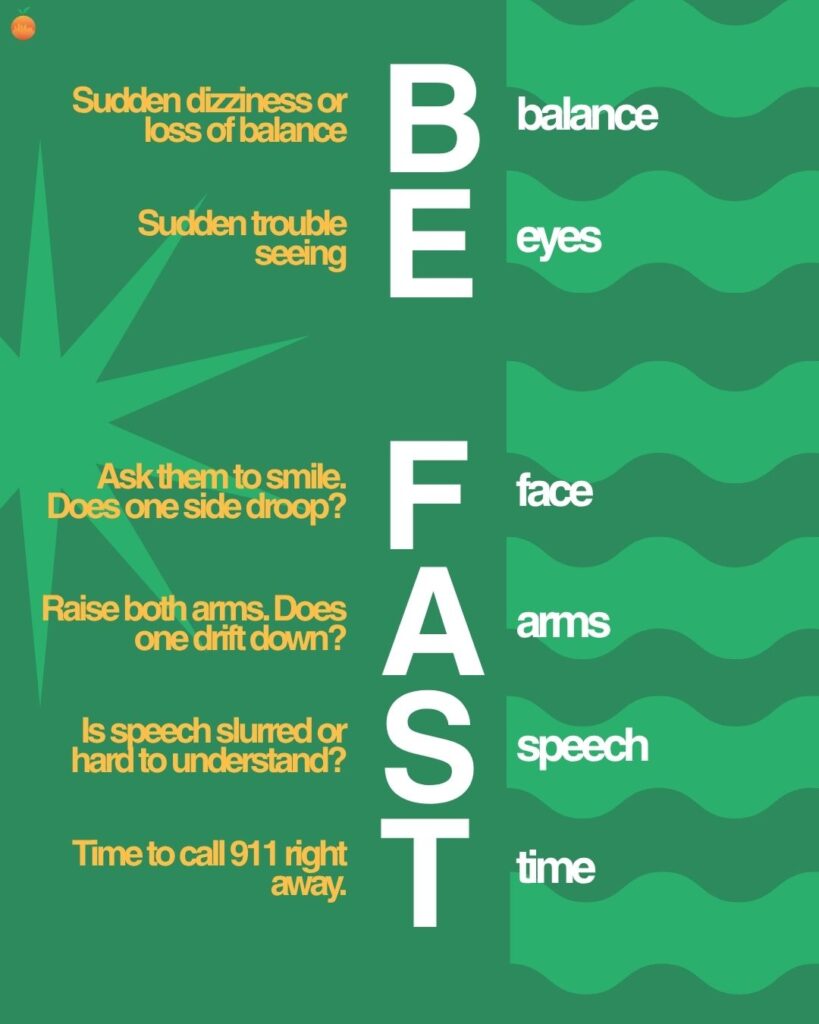
The signs of a stroke follow the BE FAST checklist: sudden loss of Balance, Eye or vision changes, Face drooping, Arm weakness, and Speech trouble. Time matters, so call 911 right away if you notice any of these. Do not wait to see if symptoms pass, and do not drive the person to the hospital yourself.
Having one stroke is a reason to stay alert for another. Every family member should know these signs. Post them on the fridge if it helps. The CDC suggests a quick check:³
- Balance: Ask if the person feels dizzy or off-balance.
- Eyes: Ask if they have trouble seeing normally.
- Face: Ask them to smile and look for a drooping side.
- Arms: Ask them to raise both arms and watch for drift.
- Speech: Ask them to repeat a simple phrase and listen for slurring.
- Time: If you see any of these signs, call 911 right away.
Note the time symptoms began. Paramedics and doctors will ask. Sudden confusion or a severe headache with no known cause also calls for 911.³
Does Medicare Cover Home Therapy After a Stroke?
Yes, Medicare covers home health care after a stroke if a doctor orders it, the person is homebound, and a Medicare-certified agency provides part-time skilled services. That can include nursing, physical therapy, occupational therapy, and speech-language pathology. Medicare does not cover 24-hour care at home or personal care when it is the only help needed.
Eligibility rules matter here, so it helps to know them. First, a doctor or other provider must see the person in person and order home health care. Second, the person must be homebound. That means leaving home takes considerable effort or needs help or equipment.⁴ Brief medical trips and outings like religious services do not disqualify someone.
Covered services include part-time skilled nursing, physical therapy, occupational therapy, speech-language pathology, and medical social services. A home health aide can help with personal care, but only alongside skilled care. Covered home health services cost the person nothing.⁴
Medicare does not pay for round-the-clock care. Many families bridge that gap with other sources. Our guide to skilled nursing at home explains what Medicare will and will not cover. For other options, see our overview of paying for senior care in Florida walks through each one.
Which Therapies Help After a Stroke?
Most stroke rehab uses a team. The National Institute of Neurological Disorders and Stroke lists physical therapists, occupational therapists, and speech-language pathologists among the specialists involved.¹ Each one targets a different part of daily life.
Physical Therapy
Physical therapy focuses on strength, balance, and walking. It often starts with exercises that help overcome weakness or paralysis.¹ A therapist also teaches safe transfers, such as moving from bed to a chair. At home, they can practice on your actual stairs, bathroom, and furniture. That makes the training far more useful.
Occupational Therapy
Occupational therapy rebuilds everyday skills like dressing, bathing, cooking, and writing. Therapists also suggest tools and home changes that make tasks easier. Our guide to in-home occupational therapy explains who it helps and what a visit looks like.
Speech and Swallowing Therapy
Strokes can affect speech, language, and swallowing. A speech-language pathologist works on word finding, understanding, and safe eating and drinking.¹ If your parent coughs often while eating, tell the doctor. You can read more in our post on speech therapy at home after a stroke.
How Can You Make the Home Safer During Recovery?
Falls are common after a stroke. Weakness, balance problems, and vision changes all add to the risk. A few changes make a big difference:
- Clear walkways of cords, clutter, and loose rugs
- Add grab bars near the toilet and in the shower
- Use a shower chair and a handheld shower head
- Improve lighting in hallways, bedrooms, and bathrooms
- Move everyday items to waist height to avoid reaching and bending
- Set up a bedroom and bathroom on the main floor if stairs are hard
The American Stroke Association advises an emergency room visit after a serious fall with severe pain, bruising, or bleeding. It also suggests seeing a doctor or physical therapist if minor falls happen more than two times within six months.² Our home safety checklist covers every room in detail.
What Does a Good Daily Routine for Stroke Recovery at Home Look Like?
Routine gives structure to a hard season. It also lowers stress for both of you. A simple day might have a few anchors:
- Morning: Medications, breakfast, and a short walk or exercise set
- Midday: A therapy session or practice time, then lunch
- Afternoon: Rest, since fatigue is common after a stroke
- Evening: A light dinner, family time, and a calm wind-down
Keep therapy practice short and frequent rather than long and exhausting. Ask the therapist for a simple home program, and follow it.
Medications deserve special attention. The American Stroke Association urges caregivers to know every medication and its side effects. Taking medicines as prescribed, eating well, staying active, and keeping regular checkups all help reduce the risk of another stroke.² Our guide on medication management for seniors offers practical systems that work.
How Common Is Depression After a Stroke?
Emotional changes can surprise families. The American Stroke Association reports that as many as 30 to 50 percent of stroke survivors may experience depression.² Depression can slow recovery and rehab, so it deserves attention.
Watch for withdrawal, loss of interest, or trouble controlling emotions. These changes can look like laziness or stubbornness. They are not. Tell the doctor about any shift in mood or behavior, and ask about a plan.² Gentle routines, visits from friends, and time outdoors often help too.
How Do You Communicate When Speech Is Affected?
Aphasia and slurred speech can frustrate everyone. A few habits help:
- Speak in short, clear sentences
- Ask one question at a time
- Give extra time to answer, and resist finishing their sentences
- Try yes-or-no questions, gestures, or pictures when words fail
- Turn off the TV or radio to reduce background noise
Treat your parent as the adult they are. Trouble speaking does not always mean trouble understanding. A speech-language pathologist can tailor strategies to your family.
How Do Caregivers Avoid Burnout?
Stroke caregiving is demanding. Many families split the duties and still feel stretched. The American Stroke Association encourages caregivers to take regular breaks, ask family or neighbors for help, eat well, exercise, and rest. Support groups and the Stroke Family Warmline at 1-888-4-STROKE (1-888-478-7653) are also available.²
Do not wait until you are exhausted. Early help protects your health and your parent’s care. Our post on caregiver burnout explains the warning signs. If your loved one is a veteran, our guide to respite care for veteran caregivers covers VA options.
When Should You Add Professional Home Care?
Some families manage alone for a while. Others need help from day one. Consider adding support when:
- Your parent needs help bathing, dressing, or using the toilet
- Falls or near-falls have started
- Medications are missed or mixed up
- You are working, raising children, or running low on energy
- Therapy the doctor ordered is not happening because of transportation
Discharge is often the hardest moment. Our post on what happens after hospital discharge explains how home care can bridge it. Families weighing other options can also read our comparison of home care vs. a nursing home.
How City Choice Home Health Care of Florida Supports Stroke Recovery at Home
For more than two decades, City Choice Home Health Care of Florida has helped families in Boca Raton, Delray Beach, and Boynton Beach. As a Medicare-certified agency, we have cared for more than 1,000 families, including many recovering from stroke.
Our team provides skilled nursing and therapy services at home, including physical, occupational, and speech therapy. Caregivers help with bathing, dressing, meals, medication reminders, and transportation to appointments. We also offer overnight or 24-hour care when needed.
Every recovery is different. We start with a home assessment and build a plan around your parent’s goals. As needs change, the plan changes too. If your family needs care after a stroke, call us. We will explain your options in plain language.
Frequently Asked Questions
Can a Stroke Survivor Live at Home?
Yes, many can. The National Institute of Neurological Disorders and Stroke notes that many survivors go home after leaving the hospital.¹ Safety, access to therapy, and daily support decide how well it works.
Can Someone Fully Recover From a Stroke?
It varies. Recovery depends on the stroke’s size and location, the quality of rehab, and health before the stroke.² Some people regain most abilities. Others live with lasting changes. Ask the care team what to expect for your parent.
How Often Does Therapy Happen at Home?
The doctor and the agency set the schedule. Medicare allows unlimited home health visits for people who qualify. Skilled nursing and aide care combined are typically up to 8 hours a day and 28 hours a week.⁴
Is It Normal for a Stroke Survivor to Be Emotional?
Yes. Mood and behavior changes are common after a stroke. Tell the doctor about any changes, especially signs of depression.²
Recovery Takes Time, and You Do Not Have to Do It Alone
A stroke changes a family’s routine overnight. But thoughtful planning, steady therapy, and the right support can make home a place where healing continues. Start with safety, keep the daily routine simple, and ask for help early. Your parent’s progress is built one ordinary day at a time.
Related Articles
Speech Therapy at Home After a Stroke: What to Expect
In-Home Occupational Therapy: What It Is and Who It’s For
Skilled Nursing at Home: What Medicare Will and Won’t Cover
Home Safety Checklist for Aging in Place
What Happens After Hospital Discharge: Why Home Care Is the Next Step
Sources
1. National Institute of Neurological Disorders and Stroke. Stroke recovery. Accessed October 14, 2026. https://www.ninds.nih.gov/health-information/stroke/recovery
2. American Stroke Association. 15 things caregivers should know after a loved one has had a stroke. Reviewed April 9, 2024. Accessed October 14, 2026. https://www.stroke.org/en/help-and-support/for-family-caregivers/15-things-caregivers-Should-know-after-a-loved-one-has-had-a-stroke
3. Centers for Disease Control and Prevention. Signs and symptoms of stroke. Accessed October 14, 2026. https://www.cdc.gov/stroke/signs-symptoms/index.html
4. Centers for Medicare & Medicaid Services. Home health services. Medicare.gov. Accessed October 14, 2026. https://www.medicare.gov/coverage/home-health-services