 Family Caregiver Resources
You took one evening off for a friend’s birthday. Then you spent the whole dinner checking your phone, sure something would go wrong. When you got home, everything was fine. The guilt stayed anyway.
Caregiver guilt is common, and it is not proof that you are failing. It is often a sign of how much you care. This guide explains why it happens and how to cope. You will also find scripts for asking for help and a plan for when guilt turns into something heavier.
What Is Caregiver Guilt?
Caregiver guilt is the feeling that you are not doing enough, or not doing it well enough, for a loved one who needs care. It often shows up as worry, self-blame, or the belief that you should be able to do it all. Family Caregiver Alliance notes there is no such thing as a perfect caregiver.¹
The guilt usually has a few familiar sources. Caregivers often feel that they:¹
- Should be doing more, or should be able to do it all
- Worry that their loved one will not get the same care when they step away
- Fear something will happen while they are gone
- Feel bad about enjoying themselves when the person they care for cannot
Most family caregivers recognize at least one of these. Naming yours is a useful first step.
Is Caregiver Guilt Normal?
Yes, caregiver guilt is a common reaction. Caregivers often feel they should do more, worry about their loved one’s care when they step away, or fear that something will happen while they are gone.¹ These feelings do not mean you are failing. They show how much you care. The goal is to manage the guilt, not perfection.
A loved one’s needs may grow over time. Your energy may not. That gap feeds the guilt. It also deserves attention before it wears you down.
Related Study/Source: Mayo Clinic lists signs of caregiver stress that include feeling burdened or worrying all the time and becoming easily irked or angry.² If those sound familiar, guilt may be carrying more weight than you realize.
What Are the Signs That Guilt Is Becoming Caregiver Stress?
Guilt and stress often travel together. Mayo Clinic lists these signs of caregiver stress:²
- Feeling burdened or worrying all the time
- Becoming easily irked or angry
- Feeling tired much of the time
- Changes in sleep or weight
- Low mood
- Frequent headaches or pains
- Misusing alcohol or drugs
- Missing your own medical appointments
You do not need every sign. One or two that last are enough to act on. Our guide to caregiver burnout signs and how to prevent it goes deeper.
How Can You Cope With Caregiver Guilt?
Start by accepting that caregiving has no perfect standard. Believe you are doing the best you can, set goals you can reach, and treat anger and frustration as normal feelings. Then ask for and accept help, talk with family, friends, or professionals, and take breaks. Small limits protect your health and your loved one’s care.¹²
Four habits make the biggest difference:
- Set realistic goals. Pick what must happen today, and let the rest wait²
- Join a support group. People in support groups know what you are dealing with²
- Set limits. Learn to decline draining requests, and accept offers of help¹
- Look after your health. Sleep better, move more, eat well, and drink water²
None of these is selfish. FCA says you are not selfish to sometimes think about your own needs and feelings.¹
How Do You Ask for Help Without Feeling Like a Burden?
Many caregivers refuse help because asking feels like failing. Mayo Clinic suggests making a list of ways others can help.² Then match each task to a person. Specific requests are easier to say yes to.
Try scripts like these:
- To a sibling: “Can you take Mom to her Tuesday appointment? I will handle Thursday.”
- To a friend: “Could you sit with Dad for two hours on Saturday morning?”
- To a neighbor: “Would you pick up groceries when you go on Friday?”
- To a relative far away: “Can you call Mom every evening at six? She looks forward to it.”
Most people want to help. They just do not know how. A clear ask solves that.
What Can You Say to Yourself When Guilt Shows Up?
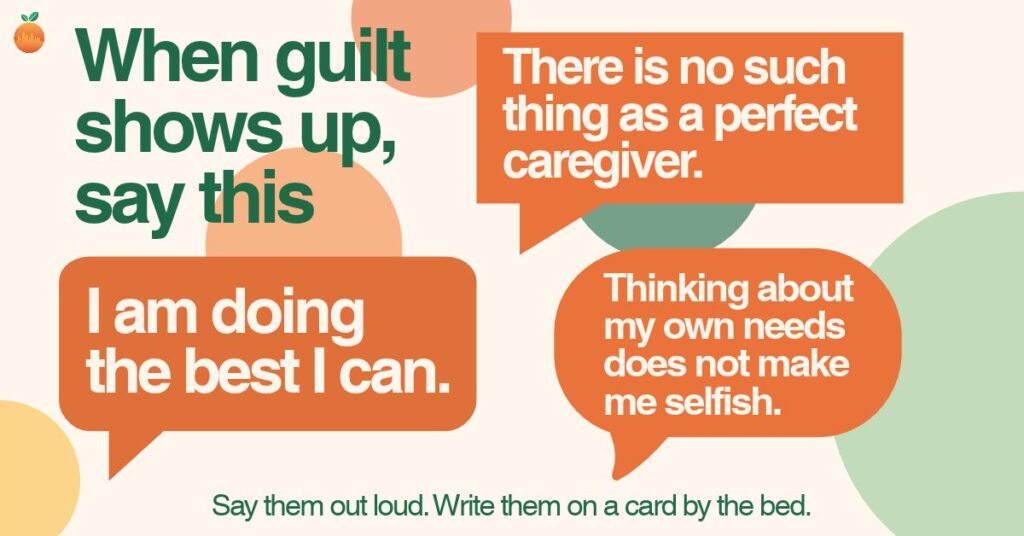
Guilt is loudest at night and during breaks. Keep three short lines ready:
- “I am doing the best I can.”²
- “There is no such thing as a perfect caregiver.”¹
- “Thinking about my own needs does not make me selfish.”¹
Say them out loud if it helps. Write them on a card by the bed. They will feel strange at first, but they get easier with use.
Is It Selfish to Take a Break?
No, taking a break is not selfish. Mayo Clinic says a break can be one of the best things you do for yourself and the person you care for.² Respite care gives a family caregiver planned time away while a trusted person steps in. Ask a doctor, a friend, or a home care agency about respite options.
A rested caregiver is a safer caregiver. Sleep sharpens your decisions. You notice more when you are not running on empty.
What About Anger and Resentment?
Many caregivers feel angry at the person they care for, at siblings, or at the whole situation. Then they feel guilty about the anger. That cycle is painful.
FCA calls anger and frustration “OK” and treats them as normal.¹ Talk about these feelings with family, friends, a support group, or a professional.¹ Bottled-up resentment grows. Spoken resentment shrinks.
How Do You Plan a Break That Actually Works?
A break fails when worry fills it. Some planning keeps your mind quiet. Follow these steps:
- Start small. Two hours is enough for the first time
- Pick a backup person and confirm the time in advance
- Write a one-page care sheet with medicines, doctor phone numbers, the daily routine, and who to call
- Leave the house. Rest at home is harder to protect
- Do one thing that has nothing to do with caregiving
- Check in afterward. Ask what went well and what to change
Each break teaches you something. The first one is the hardest. By the third, you will know the plan works.
When Does Your Loved One Need More Help Than You Can Give?
Sometimes the guilt is pointing at a real problem. Care needs have outgrown what one person can safely provide. Ask yourself these questions:
- Am I missing my own doctor visits or skipping meals?
- Is my loved one’s need for help growing faster than my strength?
- Am I afraid to leave the house, even for an hour?
- Has anyone else noticed how tired I look?
A “yes” does not mean you have failed. It means the plan needs another layer. Our guides on home care versus a nursing home and what to do when a parent will not accept help can help you think it through.
When Should You Get Help for Yourself?
Talk with a health care professional about worries or symptoms you have.² Do this sooner if you have trouble getting a good night’s sleep.² Your own health matters as much as theirs.
If you feel overwhelmed or in crisis, reach out right away. The Centers for Disease Control and Prevention says confidential, free help is available 24 hours a day through 988. You can call, text, or chat.³ Call 911 if someone is in immediate danger.
How City Choice Home Health Care of Florida Supports Family Caregivers
For more than two decades, City Choice Home Health Care of Florida has helped families in Boca Raton, Delray Beach, and Boynton Beach. We are Medicare-certified and have served more than 1,000 families. Skilled nursing and therapy, including physical, occupational, and speech therapy, can be provided at home.
Our caregivers help with bathing, dressing, meals, medication reminders, and rides to appointments. Overnight and 24-hour care are available when you need real rest. Read about 24/7 home care in Boynton Beach to see how that works.
Contact City Choice Home Health Care of Florida to talk through what your family needs.
Frequently Asked Questions
Does feeling guilty mean I am a bad caregiver?
No. There is no such thing as a perfect caregiver.¹ Guilt is a common reaction, and it often reflects how much you care.¹
Is it normal to feel angry at the person I care for?
Yes. FCA describes anger and frustration as normal feelings.¹ Share them with someone you trust.¹
Should I join a support group?
It can help. Mayo Clinic notes that people in support groups know what you are dealing with.²
Where can I get help right now?
Call or text 988 for free, confidential support at any hour.³ In immediate danger, call 911.
You Do Not Have to Be Perfect
Caregiver guilt does not go away because you tried harder. It eases when you share the load, set limits, and speak kindly to yourself. Start with one small ask this week. Then build from there.
Related Articles
- Caregiver Burnout: Signs, Symptoms and How to Prevent It
- When a Parent Won’t Accept Help
- Home Care vs. Nursing Home
- 24 Hours a Day, 7 Days a Week Home Care in Boynton Beach
- What Home Health Aides Can and Can’t Do
Sources
1. Family Caregiver Alliance. A guide to taking care of yourself. Accessed November 12, 2026. https://www.caregiver.org/print/151
2. Mayo Clinic. Caregiver stress: tips for taking care of yourself. Accessed November 12, 2026. https://www.mayoclinic.org/healthy-lifestyle/stress-management/in-depth/art-20044784
3. Centers for Disease Control and Prevention. Mental health resources. Accessed November 12, 2026. https://cdc.gov/mental-health/caring/index.html