 Family Caregiver Resources
When an elderly person falls, stay calm and do not rush to lift them. Check for pain and injury first. Call 911 if they hit their head, have neck, back, or hip pain, or cannot get up. If they seem fine, help them rise slowly and tell the doctor.
A fall can happen in seconds, and the fear lasts much longer. You may feel panic, guilt, or both. That is normal. But the first few minutes matter, and a clear plan helps. This guide walks Delray Beach, Boynton Beach, and Boca Raton families through what to do and what to watch for afterward.
What to Do When an Elderly Person Falls
When an elderly person falls, stay calm and check for pain or injury before moving them. Call 911 if they may have hurt their head, neck, back, or hip, or cannot get up. If they feel able, let them rise slowly with help, never lifting them yourself. Then tell the doctor, even if they seem fine.
The National Health Service offers simple, widely used guidance. Stay calm, check for pain or injuries before trying to get up, and keep the person comfortable and warm.² Helping carefully is fine, but never lift someone yourself.² Lifting can injure both of you.
The next sections break this down step by step.
Step-by-Step: The First Few Minutes
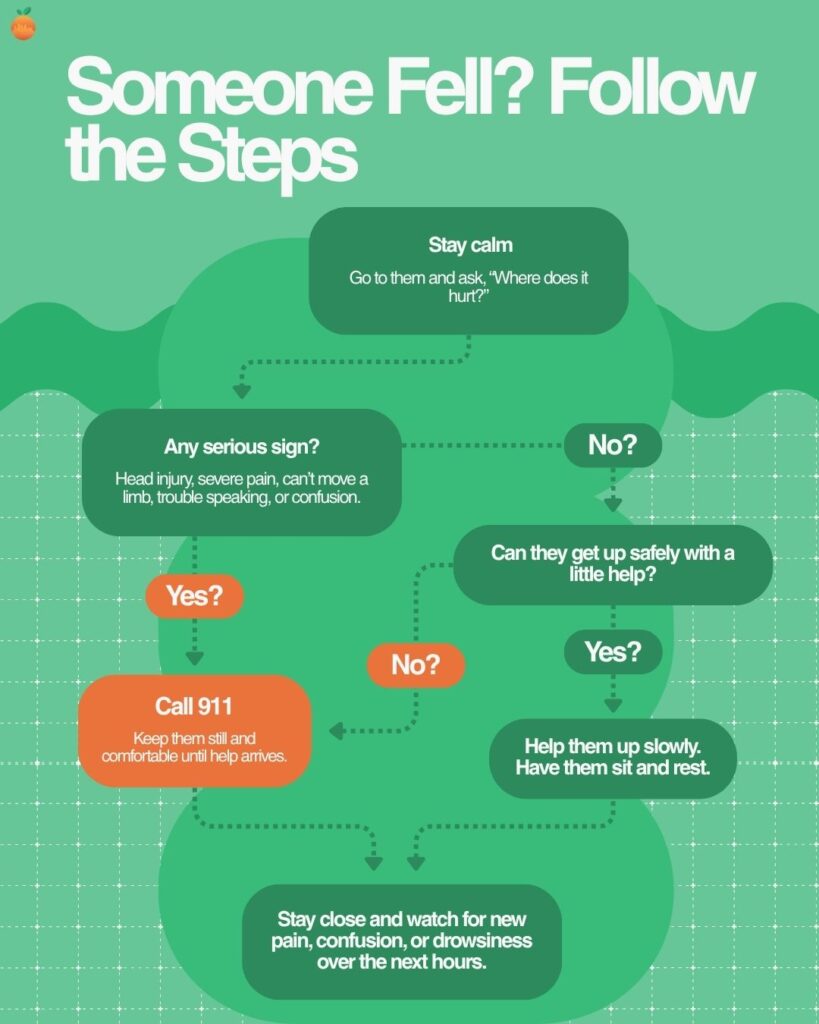
Step 1: Stay Calm and Check for Injury
Kneel beside your parent and speak in a steady voice. Ask where it hurts. Look for bleeding, swelling, or a limb that looks bent or twisted. Ask whether they hit their head. Do not pull or tug on an arm or leg.
Step 2: Decide Whether to Call 911
If you see signs of a serious injury, call right away. Do not wait to see how things go. We cover the warning signs in the next section.
Step 3: Help Them Up Slowly, or Keep Them Still
If your parent feels able, let them roll to their side, rest, and then rise slowly. Offer a sturdy chair to push up from. Support them, but do not lift. If they cannot get up or you are unsure, keep them still and call for help.
Step 4: Stay Close and Watch
Even if your parent seems fine, stay nearby for the next hours. Offer water and a place to sit. Watch for new pain, dizziness, or changes in behavior. Then make a note of what happened and when.
When Should You Call 911 After a Fall?
Call 911 after a fall if the person may have injured their head, back, neck, or hip, cannot get up, or has severe pain, heavy bleeding, or sudden confusion. Do not move someone with a possible neck or back injury. Stay with them, keep them warm, and let emergency responders take over until help arrives.
The National Health Service advises emergency help if a person may have injured their head, back, neck, or hip, or cannot get up.² In the United States, that means calling 911. The American Stroke Association also recommends an emergency room visit after a serious fall with severe pain, bruising, or bleeding.³
Head injuries deserve extra caution. The CDC reports that falls are the most common cause of traumatic brain injuries for older adults.¹ Ask your parent’s doctor ahead of time what to do after a bump to the head, especially if your parent takes blood thinners.
Related Study/Source: The CDC reports that more than one out of four older people falls each year. Falling once doubles the chance of falling again, and falls are the most common cause of traumatic brain injuries for older adults.¹
How Do You Help Someone Who Cannot Get Up?
Sometimes your parent falls when you are not there. Share this plan with them now. If they cannot get up, they should call for help with a phone or personal alarm. They can also shout or bang on a wall or floor.²
While waiting, the goal is comfort. Cover them with a towel, coat, or blanket. Gentle movement, such as rolling side to side or moving the arms and legs, can help. The National Health Service also suggests changing position about every 30 minutes to help prevent pressure sores.²
A personal alarm or fall-alert device can save precious time. Wearable options work best when worn at all times, including in the bathroom. Hard floors and wet surfaces make bathrooms a risky spot.
How Common Are Falls in Older Adults?
More than one in four adults age 65 and older falls each year, according to the CDC. Falling once doubles the chance of falling again, and less than half of older adults tell their doctor. Falls cause about 4.5 million emergency department visits a year, yet they are largely preventable with the right changes.
These numbers are sobering. But there is good news too. The CDC states that falls can be prevented, and proven methods exist even for older adults.¹ Awareness is the first step. The second is telling someone when a fall happens.
What to Do in the Hours and Days After a Fall
Many families feel relief when a parent stands up unhurt. Hold that relief lightly. Some injuries show up later. Keep an eye out for new pain, swelling, trouble walking, or unusual sleepiness. Call the doctor if anything seems off.
Tell the doctor about every fall, even a small one. The CDC notes that less than half of older adults do.¹ A doctor can look for causes, such as a medication side effect or a balance problem. The American Stroke Association suggests seeing a doctor or physical therapist if minor falls happen more than two times within six months.³
Medicare may help with recovery at home. If your parent is homebound and a doctor orders it, home health can include nursing, physical therapy, and occupational therapy from a Medicare-certified agency.⁵ Our guide to skilled nursing at home explains what is covered.
Why Do Older Adults Fall?
Older adults fall because several small risks add up, including weak muscles, poor balance, vision or hearing loss, medication side effects, dehydration, infections, and home hazards like loose rugs and poor lighting. Falls often have more than one cause, which is why a doctor’s review and a home safety check work best when done together.
Common risks include:
- Medications that cause dizziness or drowsiness
- Weak muscles and poor balance
- Poor vision or outdated glasses
- Hearing loss
- Dehydration or infections that cause confusion
- Clutter, loose rugs, and poor lighting at home
Sometimes the cause is a quiet change. A parent who shuffles, grabs the furniture, or avoids the stairs may be telling you something. Mention these signs to the doctor before a fall happens.
Vision and hearing deserve attention. The National Council on Aging reports that vision loss nearly doubles fall risk. Hearing loss nearly triples it, and hearing aid use cuts that risk by 50 percent.⁴ Our post on hearing loss and dementia explains why hearing care matters.
Medicine side effects are another big factor. Review every prescription with the doctor or pharmacist. Our medication management guide can help. Dehydration and infections can also cause dizziness or sudden confusion. Read more in our posts on dehydration in elderly adults and UTI in elderly adults.
How Can You Help Prevent Another Fall?
After one fall, the risk of another goes up. The good news is that small steps work:
- Remove rugs, cords, and clutter from walkways
- Add grab bars in the bathroom and handrails on both sides of stairs
- Use bright lighting and night lights from bed to bathroom
- Choose supportive, non-slip shoes, and avoid walking in socks
- Schedule yearly eye and hearing checks
- Ask about balance and strength exercises, such as those a physical therapist can teach
Our home safety checklist walks through every room. The CDC also offers a free Falls Free CheckUp questionnaire to help older adults check their fall risk.¹
What If Your Parent Is Afraid of Falling Again?
Fear is common after a fall. Some parents begin to avoid walking, stairs, or going out. That feels safer, but it often leads to weaker muscles and more risk. Encourage gentle, regular movement, and praise small efforts.
Ask the doctor about physical therapy. A therapist can build strength and confidence in a safe way. Occupational therapy can also help with bathing and dressing safely. Our guide to in-home occupational therapy explains how it works.
How City Choice Home Health Care of Florida Helps After a Fall
For more than two decades, City Choice Home Health Care of Florida has supported families in Delray Beach, Boynton Beach, and Boca Raton. As a Medicare-certified agency, we have cared for more than 1,000 families.
Our team provides skilled nursing and therapy services at home, including physical therapy, to support recovery after an injury or hospital stay. Caregivers can also help with bathing, dressing, meals, medication reminders, and rides to appointments. When needed, we offer overnight or 24-hour care.
A fall does not have to end your parent’s independence. With the right support, many seniors stay safely at home. Call us to talk through your situation. We will explain your options clearly. Our post on what happens after hospital discharge also covers the transition home.
Frequently Asked Questions
Should I Lift My Parent Off the Floor?
No. The National Health Service advises helping carefully but never lifting the person yourself.² If your parent cannot get up on their own, call for help. Lifting can hurt your back and worsen their injury.
Do We Need the Emergency Room After Every Fall?
Not always. Go to the emergency room for a serious fall with severe pain, bruising, or bleeding.³ Call 911 for a possible head, neck, back, or hip injury, or if your parent cannot get up. For other falls, call the doctor and describe what happened.
How Long Should I Watch for Problems After a Fall?
Watch closely for the next several days. Call the doctor if new pain, swelling, confusion, or unusual sleepiness appears. When in doubt, call. It is better to ask than to wait.
Does Medicare Cover Help After a Fall?
Yes, in some cases. Medicare covers part-time skilled nursing and therapy at home for people who qualify as homebound with a doctor’s order.⁵ It does not cover 24-hour care or personal care when that is the only help needed.⁵
A Plan Makes the Next Fall Less Scary
Knowing what to do when an elderly person falls turns panic into action. Stay calm, check for injury, call for help when needed, and never lift alone. Then follow up with the doctor and make the home safer. Small steps today protect your parent’s independence tomorrow.
Related Articles
Home Safety Checklist for Aging in Place
Fear of Falling in Delray Beach
Hearing Loss and Dementia: What Delray Beach Families Should Know
Medication Management for Seniors: A Practical Guide for Delray Beach Families
Dehydration in Elderly Adults: A Florida Heat Guide for Boynton Beach Families
What Happens After Hospital Discharge: Why Home Care Is the Next Step
Sources
1. Centers for Disease Control and Prevention. Facts about older adult falls. Accessed October 14, 2026. https://www.cdc.gov/falls/data-research/facts-stats/index.html
2. National Health Service (United Kingdom). Falls. Accessed October 14, 2026. https://www.nhs.uk/conditions/falls/
3. American Stroke Association. 15 things caregivers should know after a loved one has had a stroke. Reviewed April 9, 2024. Accessed October 14, 2026. https://www.stroke.org/en/help-and-support/for-family-caregivers/15-things-caregivers-Should-know-after-a-loved-one-has-had-a-stroke
4. National Council on Aging. Get the facts on falls prevention. Accessed October 14, 2026. https://www.ncoa.org/article/get-the-facts-on-falls-prevention/
5. Centers for Medicare & Medicaid Services. Home health services. Medicare.gov. Accessed October 14, 2026. https://www.medicare.gov/coverage/home-health-services