 Home Care Guides
What Is VA Aid and Attendance?
VA Aid and Attendance is a monthly pension benefit from the Department of Veterans Affairs (VA). It helps cover home health aides, personal care, and other daily support at home. Veterans and surviving spouses who need help with everyday activities may qualify, even without a service-connected disability. The benefit exists to make in-home care more affordable.
That last point surprises a lot of families. No combat injury or disability rating is required to qualify. What matters is whether the veteran or surviving spouse genuinely needs help with daily activities, and whether their finances fall within VA limits once care costs are factored in.
Many families discover this benefit late. Often that’s after already paying out of pocket for months or years of care. That’s unfortunate, because the application process rewards early filing. Understanding how the benefit works can change how a family plans for a veteran’s long-term needs.
Why This Benefit Exists
The VA created Aid and Attendance to recognize a simple reality. Aging veterans and their spouses often need daily support long before they need a nursing home. Rather than pushing families toward institutional care, the benefit funds support at home. That reflects what most veterans actually want. Surveys of older adults consistently show a strong preference for aging in place. Veterans are no exception.
The pension itself has existed for decades. Aid and Attendance is an add-on, sometimes called a “special monthly pension.” It sits on top of the base pension amount. Because it’s a needs-based benefit rather than a compensation benefit, it works differently than disability payments. Many veterans are more familiar with those.
Who Qualifies for the Benefit
Eligibility comes down to three things: service history, care needs, and finances. Each has its own set of rules. All three have to line up before an application can succeed.
Military Service Requirements
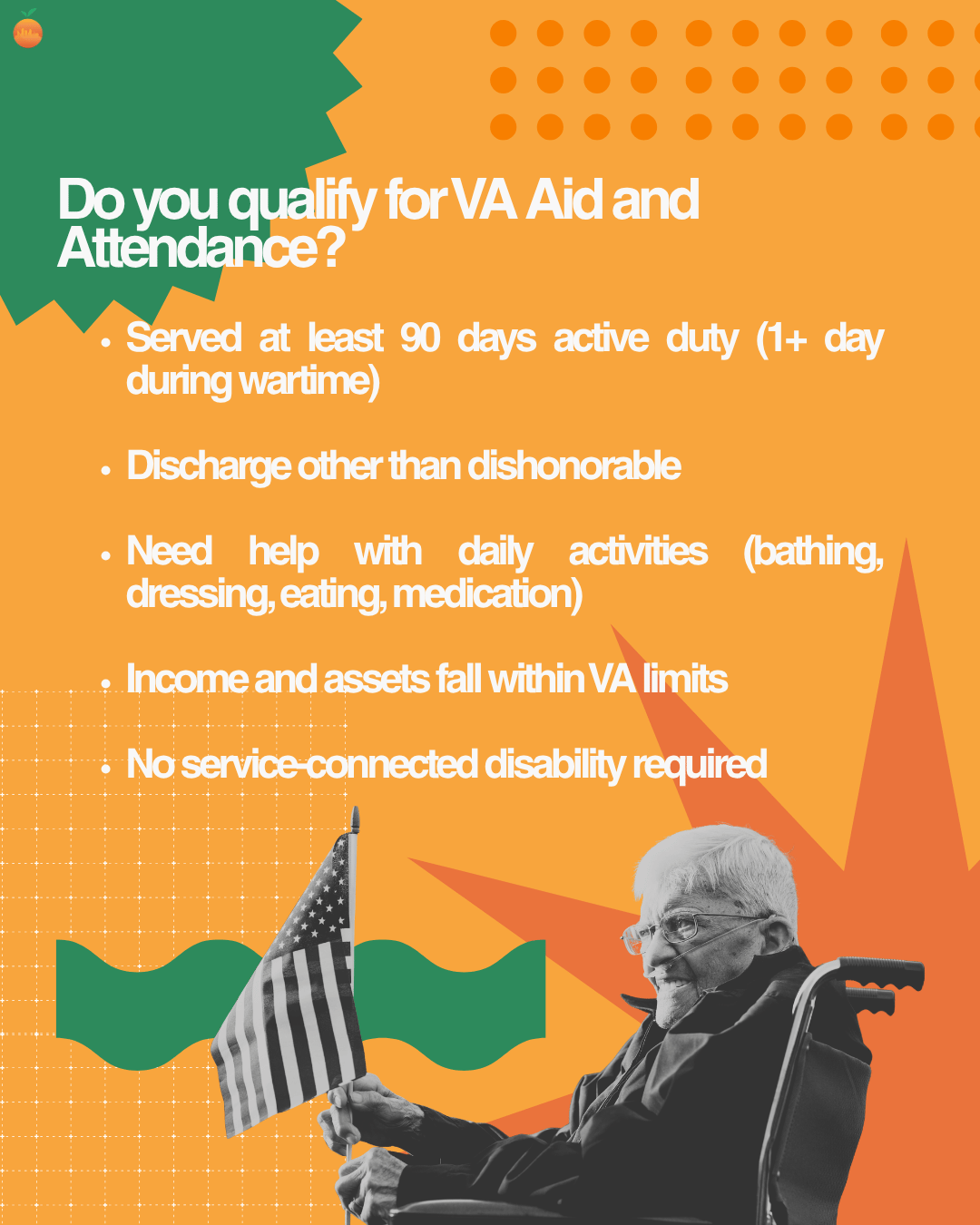
A veteran must have served at least 90 days of active duty. At least one day must fall during a wartime period. The discharge cannot be dishonorable. Surviving spouses of qualifying veterans may also apply, provided the marriage meets VA requirements around timing and duration. Combat service is not required. Many families assume otherwise and skip applying because of it. That means real benefits go unclaimed every year.
Wartime periods recognized by the VA include World War II, the Korean War, the Vietnam War, and the Gulf War era, among others. A veteran doesn’t need to have served overseas or seen combat during that period. They simply need active duty service that falls within the recognized dates.
Medical and Care Needs
The applicant must need help with daily activities like bathing, dressing, eating, or managing medication. A doctor’s statement documenting this need is part of the application. Veterans in nursing homes qualify automatically. Those living at home need a physician to confirm the level of assistance required.
This is often where families get stuck. A primary care doctor unfamiliar with VA paperwork may not describe care needs the way the VA expects. Working with a home care agency or claims specialist can help. They know what the VA looks for, and that can prevent delays caused by vague medical documentation.
Income and Asset Limits
The VA looks at income and countable assets together. Unreimbursed medical expenses can be subtracted from income when calculating eligibility. That includes the cost of in-home care. This is where many families miss out on benefits they actually qualify for. A care agency invoice, kept and submitted properly, can lower countable income enough to unlock the benefit.
Asset limits change periodically. They depend on the applicant’s net worth, including certain investments and property beyond a primary residence. A veteran who assumes they earn “too much” to qualify should still check current limits before ruling it out. Home care costs, once documented, often bring countable income well below the threshold.
How Much Financial Support Can Veterans Receive
Payment amounts depend on marital status, whether a spouse also needs care, and whether the applicant is a veteran or a surviving spouse. The VA adjusts these figures periodically. Families should confirm current numbers directly on va.gov, or with an accredited VA claims agent, before budgeting around a specific amount.
Here’s what matters most for planning purposes. The benefit is designed to meaningfully offset the monthly cost of home care, not just supplement it. For many families, it covers a substantial portion of a part-time home health aide schedule. Others managing more extensive daily support needs treat it as one piece of a larger care budget, alongside personal savings or long-term care insurance.
It’s also worth noting that Aid and Attendance amounts run higher than the base pension alone. They also run higher than Housebound benefits. Housebound benefits apply to a narrower group of veterans who are largely confined to their homes but don’t need the same level of daily personal care.
Using Aid and Attendance for In-Home Care Services
Once approved, the monthly payment goes directly to the veteran or surviving spouse. There is no requirement to use a specific home care agency. There’s also no requirement to spend the money exclusively on licensed medical care. Families can apply the funds toward personal care, companion care, or skilled home health services. It depends on what the veteran actually needs.
This flexibility matters. A veteran managing a chronic condition might need a home health aide a few hours a day, for bathing and medication reminders. Another might need more consistent support throughout the week. That could mean help with meals, mobility, and transportation to appointments. Aid and Attendance does not dictate a care plan. It gives families the financial room to choose one that actually fits.
Home care agencies familiar with VA benefits can help document care hours and costs. That makes the annual VA review process smoother. Documentation matters more than families expect going in. Keep it organized from day one. The VA can request proof of ongoing medical expenses to confirm continued eligibility.
Some families also combine Aid and Attendance with other VA home and community-based programs, like the Homemaker/Home Health Aide benefit. These programs work differently and have separate eligibility rules. It’s worth asking a knowledgeable care coordinator how they fit together, rather than assuming they overlap.
How to Apply for VA Aid and Attendance
The application process starts with VA Form 21-2680, Examination for Housebound Status or Permanent Need for Aid and Attendance. A physician completes most of this form. It describes the veteran’s functional limitations and daily care needs in detail. Supporting documents typically include discharge papers (DD-214), financial statements, and medical evidence of care needs.
Applications can take several months to process. Incomplete paperwork is the most common cause of delay. Working with an accredited VA claims agent or a Veterans Service Organization can reduce errors that slow things down. This help is often available at no cost to the veteran or their family.
Filing early matters for another reason too. Some benefits can be backdated to the application date once approved. That can mean a meaningful lump-sum payment covering the review period.
Families sometimes worry that applying will be complicated or invasive. It can feel that way at first. But the paperwork exists to confirm real need, not to create obstacles. Most veterans who genuinely qualify do eventually get approved, with the right documentation in place.
Get Help With the Paperwork: The VetAssist Program
Applying for Aid and Attendance can feel overwhelming, especially while also arranging care for a loved one. City Choice partners with Veterans Home Care, the organization behind the VetAssist Program, to make that process easier for families in Palm Beach County.
Since 2003, Veterans Home Care has helped more than 23,000 veterans and surviving spouses apply for and receive Aid and Attendance. Their team handles the paperwork, gathers required documentation, and follows up with the VA on a family’s behalf throughout the review process.
One feature stands out. VA applications often take two to six months to process. The VetAssist Program can advance the cost of home care so it starts right away, without waiting on approval. That loan is repaid automatically once the retroactive VA payment comes through, so families aren’t stuck paying out of pocket while they wait.
Through this partnership, City Choice provides the hands-on home care, while Veterans Home Care manages the benefit application and financing side. Families get both pieces handled, without coordinating two separate processes alone.
Learn more about the program directly at veteranshomecare.com/vetassist.
What to Gather Before You Apply
A little preparation up front makes the VA Aid and Attendance process move faster and saves months of back-and-forth later. Before starting the application, most families benefit from collecting the following:
- The veteran’s discharge paperwork (DD-214) or other proof of service dates
- Recent financial statements, including income sources and countable assets
- Receipts or invoices for any current medical or home care expenses
- Contact information for the veteran’s primary care physician
- Marriage certificate, if a surviving spouse is applying
Having these documents ready doesn’t guarantee a fast approval. But it removes the most common cause of delay: the VA requesting information that should have been included from the start. A physician’s letter describing daily care needs in specific, concrete terms is especially valuable, since vague language is one of the most frequent reasons applications stall in review.
Families working with a home care agency already have a head start here. Care logs, service invoices, and care plan notes double as supporting documentation for the VA application, since they show a documented pattern of need over time.
Common Questions From Families
Can I get Aid and Attendance and Medicare at the same time?
Yes. Aid and Attendance is a VA pension benefit, and Medicare is separate federal health insurance. They cover different things. Medicare generally pays for skilled medical care ordered by a doctor. Aid and Attendance can help pay for the personal, non-medical support that Medicare typically doesn’t cover, like help with bathing or dressing. Many families use both together.
What happens if my application gets denied?
A denial isn’t always final. Many denials happen because of missing documentation, not because the veteran doesn’t qualify. Families can appeal, or reapply with stronger medical and financial evidence. Working with a Veterans Service Organization on the first application often prevents this problem entirely, since they know what the VA needs to see.
Does the veteran have to be a certain age?
No. Aid and Attendance is based on care needs and service history, not age. Younger veterans with qualifying service and a documented need for daily assistance can apply, just as older veterans can. Age alone neither helps nor hurts an application.
In-Home Care Support in Boca Raton, Delray Beach, and Boynton Beach
City Choice Home Health Care has served families across Palm Beach County for more than two decades. That includes over 1,000 families in Boca Raton, Delray Beach, and Boynton Beach. Many needed trustworthy, consistent home care during some of the hardest transitions a family faces.
Veterans and their families often come to us after approval, once they know what monthly support they have to work with. Others reach out earlier, while the application is still being reviewed. They want to start planning ahead and understand what care might eventually look like. Either way, our team can walk through what services fit a veteran’s specific needs. We can also explain how Aid and Attendance funds might apply toward them.
Every veteran’s situation looks different. Some need a few hours of help each week with light housekeeping and companionship. Others need daily support with personal care, mobility, and medication management. But the goal stays the same across every family we work with. We aim to keep veterans safe, comfortable, and independent at home, for as long as that’s the right choice.
If your family is exploring VA Aid and Attendance, or already has approval and wants to understand how it applies to home care, reach out. We can talk through options without pressure or a hard sell. And we’ll help you figure out what a realistic care plan looks like, given your specific benefit amount.