 Home Care Guides
Most families start thinking about care costs at the worst possible moment. A fall, a hospital stay, or a new diagnosis suddenly makes help at home urgent. Then the questions start. Will Medicare pay? Do we qualify for Medicaid? What about Dad’s old insurance policy?
The good news is that there are more options than most people realize. What is harder is knowing which ones apply and how they fit together. This guide walks through paying for senior care in Florida, from Medicare and Medicaid to veterans benefits, insurance, and personal resources. For a breakdown of typical prices, see our companion guide on how much home care costs in Florida.
How Do You Pay for Senior Care?
Most families pay for senior care through a combination of sources. Medicare covers short-term skilled care at home, while Florida Medicaid’s long-term care program helps qualifying low-income seniors. Veterans may receive VA benefits. Long-term care insurance, life insurance, home equity, and personal savings fill the gaps. The right mix depends on care needs, income, assets, and service history.
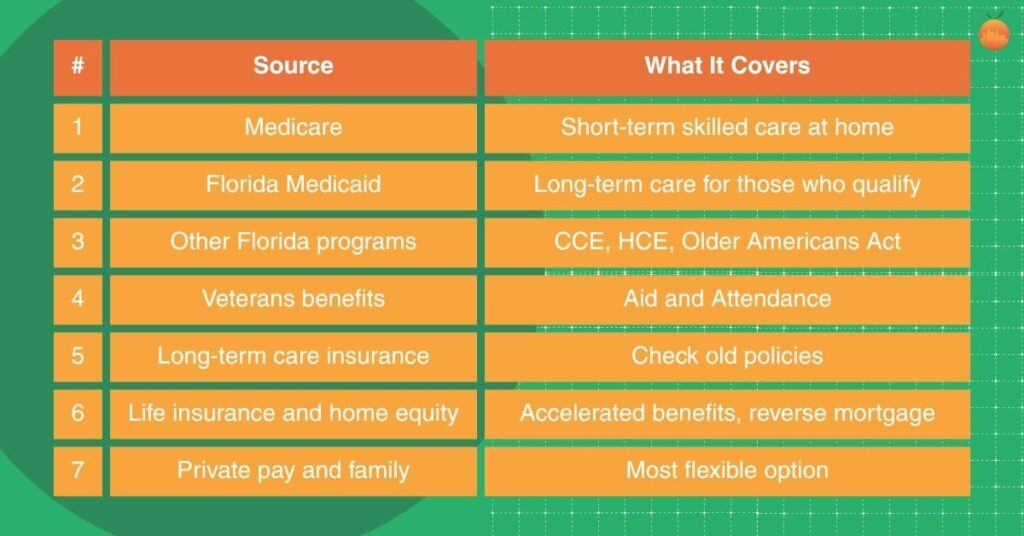
Rarely does one source cover everything. So the smartest approach is to understand each option, then build a plan that layers them together.
Does Medicare Pay for Home Care?
Medicare pays for home health care when a person is homebound and needs part-time skilled services, such as nursing, physical therapy, or speech therapy, ordered by a doctor. Covered care has no copay through a Medicare-certified agency. However, Medicare does not pay for 24-hour care or for help with daily tasks when that is the only care needed.
In other words, Medicare covers care that helps someone recover or manage a medical condition. That can include:
- Skilled nursing visits, such as wound care or medication teaching
- Physical, occupational, and speech therapy
- Part-time home health aide visits alongside skilled care
- Medical social services
What Medicare generally does not cover is long-term “custodial” care. That includes ongoing help with bathing, dressing, meals, and supervision when no skilled care is needed. Our guide to skilled nursing at home explains the rules in more detail.
Medicare is often the first place families look, and it is also the most misunderstood. Private Medicare Advantage plans can add a twist. Some now offer extra in-home support benefits, such as a limited number of aide hours or meal delivery after a hospital stay. These benefits vary widely from plan to plan. So check your loved one’s Evidence of Coverage document, or call the plan and ask directly what in-home help is included this year.
Florida Medicaid Long-Term Care
For seniors with limited income and assets, Medicaid can be the biggest source of long-term help. In Florida, home and community care is provided through the Statewide Medicaid Managed Care Long-Term Care program, often called SMMC LTC.
The program can cover services such as:
- Personal care and homemaker help
- Adult day care
- Respite care for family caregivers
- Home modifications and medical equipment
- Care coordination through a managed care plan
To qualify, a person generally must be 65 or older, or have a disability, and meet both financial and medical requirements. The medical side means needing the level of care usually provided in a nursing home.
There is an important catch. Enrollment in the home and community program is limited, and many applicants are placed on a waitlist. So it helps to start early.
To begin, contact your local Aging and Disability Resource Center. In Palm Beach County, that is the Area Agency on Aging of Palm Beach/Treasure Coast. They screen applicants and explain next steps.
Related Study/Source: Under Florida’s process, people seeking long-term care at home are first screened by their local Aging and Disability Resource Center. They are then placed on a waitlist ranked by priority, with those facing the most urgent needs generally enrolled first. Families are encouraged to call early rather than waiting until a crisis.¹
Other Florida Programs for Seniors
Beyond Medicaid, the Florida Department of Elder Affairs funds several programs that help seniors stay at home. Availability depends on funding and local waitlists.
Community Care for the Elderly (CCE). Provides services like personal care, homemaking, and respite to adults 60 and older who are at risk of nursing home placement.
Home Care for the Elderly (HCE). Offers a modest monthly payment to family members caring for an older relative at home.
Older Americans Act programs. Fund meals, transportation, caregiver support, and other services through local agencies.
Again, the Area Agency on Aging is the front door for all of these.
Veterans Benefits
Veterans and their surviving spouses may qualify for help through the Department of Veterans Affairs (VA). One of the most useful programs is Aid and Attendance, a monthly benefit added to a VA pension for people who need help with daily activities. It can be used to pay for care at home.
Applications can take months to process. That delay leaves many families struggling to cover care in the meantime. City Choice partners with Veterans Home Care’s VetAssist Program, which offers a 0% interest loan so care can begin while a VA application is still pending.
Our guide to VA Aid and Attendance covers eligibility and the application process step by step.
Long-Term Care Insurance
If your loved one bought a long-term care insurance policy years ago, now is the time to dig it out. Many families forget these policies exist.
Most policies pay benefits when a person cannot perform two or more activities of daily living, such as bathing or dressing, or has a cognitive impairment like dementia. Many include an elimination period, often 30 to 90 days, before payments begin.
To start a claim, call the insurance company and ask for a claim packet. You will usually need a doctor’s assessment and a plan of care. A home care agency can often help with the paperwork. City Choice works with most major long-term care insurance carriers.
Life Insurance and Home Equity
Other assets can also help fund care, though each option has trade-offs worth weighing carefully.
Life insurance options. Some policies allow accelerated death benefits for people with chronic or terminal illness. Others can be sold through a life settlement or converted into a benefit that pays for care.
Reverse mortgages. Homeowners 62 and older may be able to draw on their home equity without monthly payments. This can work well for someone who plans to stay at home long term. However, fees can be high, and the loan must be repaid when the home is sold.
Selling or renting property. Some families sell a second home or rent out a room to cover costs.
Before choosing any of these, talk with a financial advisor or elder law attorney. They can explain how each choice affects taxes, Medicaid eligibility, and inheritance.
Private Pay and Family Contributions
Many families pay for at least part of their care out of pocket. This offers the most flexibility, since you choose the schedule, the caregiver, and the level of support.
When several siblings share the cost, a written agreement helps prevent misunderstandings. It should cover who pays what, how decisions are made, and how the plan will change if needs grow.
Some adult children also set up a simple shared account for care expenses. It keeps records clean and makes contributions easy to track. Also ask a tax professional about possible deductions. In some cases, care costs may count as deductible medical expenses.
Planning Ahead Makes Paying for Senior Care Easier
The families who have the easiest time are usually the ones who planned early. Even a single conversation now can save months of stress later. Consider these steps:
- Find and review any existing insurance policies.
- Gather financial records, including income, assets, and monthly bills.
- Collect military discharge papers if your loved one served.
- Contact the Area Agency on Aging to learn about local programs.
- Meet with an elder law attorney about powers of attorney and Medicaid planning.
- Talk openly as a family about wishes and responsibilities.
Timing matters here as well. Many benefits take weeks or months to approve. Starting the process while your loved one is still fairly independent means support can be ready the moment it is needed, instead of scrambling after a hospital stay.
Planning is not only about money. It is also about making sure your loved one’s preferences guide every decision.
Questions to Ask a Home Care Agency About Payment
A good agency should make the money side clear, not confusing. Before starting care, ask:
- Which payment sources do you accept, including Medicare, Medicaid plans, VA benefits, and long-term care insurance?
- Will you help file insurance claims or VA paperwork?
- Is there a minimum number of hours per visit or per week?
- How are rates different for nights, weekends, or holidays?
- What happens if our needs or budget change?
- Are caregivers employees of the agency, with background checks and training?
Clear answers up front prevent surprise bills later. They also make paying for senior care far easier to plan month to month.
Common Mistakes to Avoid
A few missteps come up again and again. Avoiding them can protect both your finances and your eligibility for help.
- Giving away assets too late. Florida Medicaid reviews transfers made in the five years before applying. Gifts during that time can delay eligibility.
- Assuming Medicare covers everything. It does not pay for long-term custodial care.
- Waiting until a crisis. Waitlists and claim processes take time.
- Missing old policies. Search files, bank statements, and mail for any insurance premiums.
- Skipping professional advice. Rules are complex and change often.
How City Choice Helps Families Navigate Payment
For more than two decades, City Choice Home Health Care has helped families in Boca Raton, Delray Beach, and Boynton Beach find their way through care decisions. Our Medicare-certified agency has served more than 1,000 families.
We work with Medicare, Medicaid, VA benefits, and most major long-term care insurance carriers, including Genworth, John Hancock, Mutual of Omaha, and Lincoln. That means we can often help you understand which sources may apply and what paperwork is needed.
Our team can also build a care plan that fits your budget. Some families start with a few hours a week and add more as needs change. Others combine Medicare-covered skilled care with private caregiving. A home care assessment is a simple first step toward figuring out what makes sense.
Frequently Asked Questions
Does Medicaid Pay for Home Care in Florida?
Yes, through the Statewide Medicaid Managed Care Long-Term Care program. It serves seniors and adults with disabilities who meet financial and medical requirements. Enrollment is limited, so many people wait before services begin.
Does Medicare Pay for 24-Hour Home Care?
No. Medicare covers only part-time or intermittent skilled care for homebound patients. Families who need round-the-clock support typically combine other sources, such as private pay, insurance, or VA benefits.
Can Family Members Get Paid to Provide Care?
Sometimes. Certain Florida Medicaid options allow participants to choose some caregivers, including relatives. Veterans may also qualify for VA caregiver programs. Rules vary, so ask the program directly.
Who Can Help Us Figure Out Our Options?
Start with your local Area Agency on Aging. An elder law attorney, financial planner, or home care agency can also help you understand which options fit your situation.
Every Family’s Plan Looks Different
Paying for senior care can feel overwhelming at first. But most families find a workable path once they see all the pieces together. Start early, ask questions, and lean on people who do this every day. City Choice is here to help your family take the next step.
Related Articles
- How Much Does Home Care Cost in Florida?
- Skilled Nursing at Home: What Medicare Will and Won’t Cover
- VA Aid and Attendance for In-Home Care
- Levels of Care for Seniors
- Home Care vs. Nursing Home
Sources
- Florida Agency for Health Care Administration. Statewide Medicaid Managed Care Long-Term Care program. Accessed September 23, 2026. https://ahca.myflorida.com/medicaid/statewide-medicaid-managed-care/long-term-care-program
- Centers for Medicare & Medicaid Services. Home health services. Medicare.gov. Accessed September 23, 2026. https://www.medicare.gov/coverage/home-health-services
- Florida Department of Elder Affairs. Programs and services. Accessed September 23, 2026. https://elderaffairs.org/programs-services/
- U.S. Department of Veterans Affairs. VA Aid and Attendance benefits and Housebound allowance. Accessed September 23, 2026. https://www.va.gov/pension/aid-attendance-housebound/