 Senior Health Wellness
Catching your breath shouldn’t feel like a daily battle. For people living with COPD, though, it often does. Simple tasks like climbing stairs or carrying groceries can leave you gasping for air. Even a short walk to the mailbox can turn into an exhausting ordeal.
The good news: specific breathing exercises for COPD can genuinely help. They won’t cure the disease, but they can ease symptoms and give you more control over flare-ups. This guide walks through the techniques that work, how often to practice them, and how in-home care in Boynton Beach can reinforce these habits every single day.
What Is COPD and Why Breathing Exercises Matter
COPD, or chronic obstructive pulmonary disease, gradually damages the airways and air sacs in your lungs. It makes breathing harder over time, especially during physical activity. Common symptoms include shortness of breath, chronic coughing, and excess mucus production.
Breathing exercises for COPD target a specific problem: trapped air. Damaged lungs struggle to fully empty with each breath, leaving stale air behind and reducing the room for fresh oxygen. The right breathing exercises for COPD retrain your body to exhale more completely, which eases that trapped-air sensation and reduces breathlessness.
What Is Pursed-Lip Breathing?
Pursed-lip breathing is a controlled breathing technique where you inhale through the nose and exhale slowly through lips pursed like blowing out a candle, roughly twice as long as the inhale. It’s one of the most effective breathing exercises for COPD, helping empty trapped air from the lungs and easing shortness of breath during activity or flare-ups.
Here’s how to do it:
- Relax your neck and shoulders.
- Inhale slowly through your nose for two counts.
- Purse your lips as if you’re about to blow out a candle.
- Exhale gently through pursed lips for four counts, roughly twice as long as your inhale.
- Repeat several times until your breathing feels steadier.
Use this technique right before physical activity, or the moment you notice breathlessness creeping in. Many people find it helpful during stairs, walking, or light housework.
What Is Diaphragmatic Breathing?
Diaphragmatic breathing, also called belly breathing, is a technique that strengthens the diaphragm, the main muscle used for breathing, instead of relying on neck and shoulder muscles. The technique involves inhaling deeply so the belly rises while the chest stays still, then exhaling slowly through pursed lips. It reduces fatigue and improves breathing efficiency over time.
Try this version:
- Sit comfortably or lie down with your knees bent.
- Place one hand on your chest and one on your belly.
- Inhale slowly through your nose, letting your belly rise while your chest stays still.
- Exhale slowly through pursed lips, letting your belly fall.
- Practice for five to ten minutes at a time.
This exercise takes practice. Don’t get discouraged if it feels awkward at first. Consistency matters more than perfection here.
What Is Huff Coughing?
Huff coughing is a controlled coughing technique that clears mucus from the airways without the exhaustion of a regular, forceful cough. It involves taking a medium breath in, then breathing out forcefully while making a quiet huffing sound, repeated a few times. It’s especially useful for people with COPD who produce excess mucus regularly.
- Take a medium-sized breath in.
- Open your mouth and breathe out forcefully, making a quiet “huff” sound.
- Repeat two or three times, then rest before continuing.
This technique moves mucus toward your upper airway, where it becomes easier to clear naturally.
A Combined Exercise: Breathing with Arm Movement
Some respiratory therapists recommend pairing diaphragmatic breathing with gentle arm movement for an added lung-capacity boost. Inhale deeply through your nose while slowly raising both arms overhead. Then exhale through pursed lips while lowering your arms back down. Repeat five to ten times. This variation works well as a gentle warm-up before light activity.
How Often to Practice Breathing Exercises for COPD
Consistency drives results with any breathing exercise for COPD. Most respiratory therapists recommend practicing three to four times daily, for five to ten minutes per session. Morning sessions help clear overnight mucus buildup. Sessions before activity help you stay ahead of breathlessness instead of reacting to it.
Progress happens gradually. Don’t expect dramatic results within the first week. Many people notice steadier breathing and less anxiety around exertion after a few consistent weeks.
Additional Daily Habits That Support Better Breathing
Breathing exercises for COPD work best alongside a few other daily habits. Together, they create a more complete approach to symptom management.
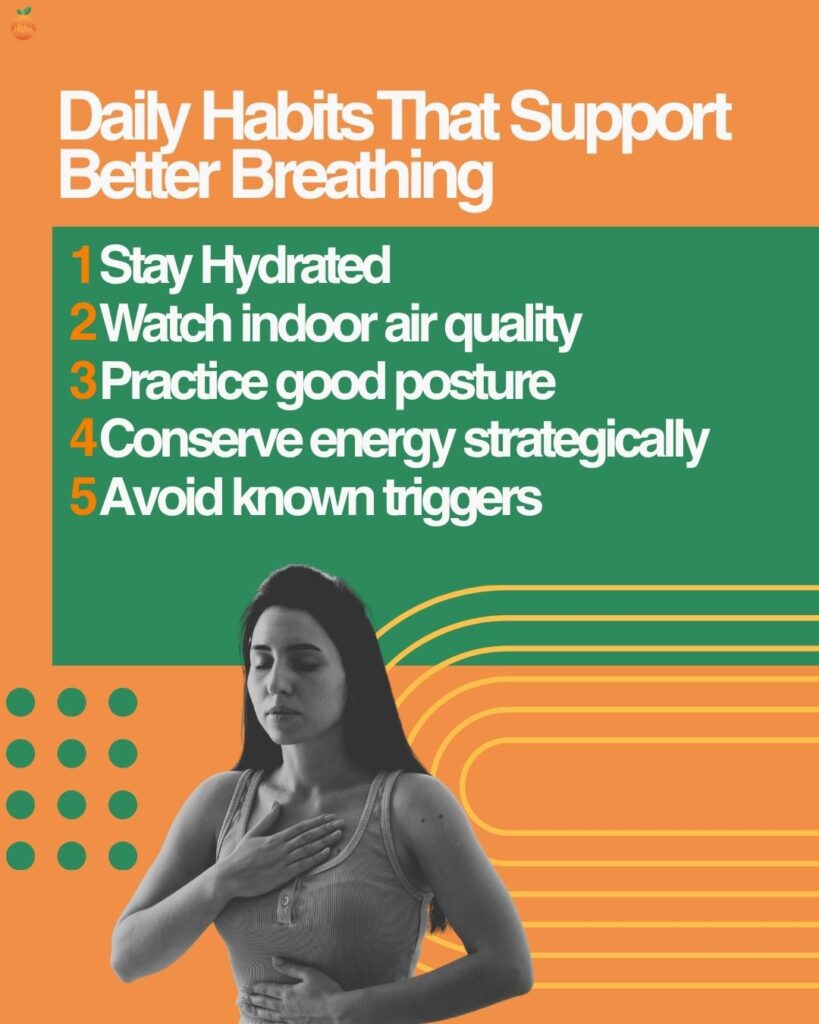
- Stay hydrated. Thinner mucus clears more easily, so water intake matters more than people expect.
- Watch indoor air quality. Dust, smoke, and strong cleaning fumes can trigger flare-ups. Simple steps like air filters help.
- Practice good posture. Slouching compresses the lungs and makes full breaths harder to achieve. Sitting upright supports easier breathing throughout the day.
- Conserve energy strategically. Sit while doing tasks when possible, and pace activities instead of rushing through them.
- Avoid known triggers. Cold air, strong perfumes, and humidity swings affect different people differently. Tracking personal triggers helps prevent avoidable flare-ups.
Small daily adjustments add up. Combined with consistent breathing practice, these habits give people with COPD more stable, predictable days.
How In-Home Care Supports Better Breathing
Learning these techniques is one thing. Practicing them consistently, every day, is another challenge entirely. That’s where in-home care makes a real difference for Boynton Beach families managing COPD.
City Choice caregivers help clients build breathing exercises for COPD into their daily routine, rather than treating them as an occasional afterthought. Caregivers offer gentle reminders, provide encouragement during sessions, and track any changes in breathing patterns or symptoms worth flagging to a nurse.
This kind of ongoing, structured support isn’t just a nice extra. A major Cochrane systematic review examined self-management support for COPD, which includes daily symptom monitoring, medication adherence, and consistent routine reinforcement, exactly what an in-home caregiver provides. The review found that patients receiving this kind of structured support had a meaningfully lower risk of at least one respiratory-related hospital admission compared to usual care. Among higher-risk patients, roughly one hospital admission was prevented for every 15 people who received consistent self-management support over about ten months. Importantly, the review also found no increase in mortality risk, reinforcing that this kind of support is safe as well as beneficial.
Related Study:
Self-management interventions for people with chronic obstructive pulmonary disease — Cochrane Database of Systematic Reviews (2022). Full citation listed in Sources below.
Beyond breathing exercises, City Choice caregivers assist with medication reminders, oxygen equipment support, energy conservation strategies, and coordination with skilled nursing when symptoms escalate. This layered approach keeps small issues from becoming emergency room visits.
What to Expect from a City Choice Care Plan
Starting COPD-focused home care follows a clear, predictable process. Families always know what happens next.
Assessment first. A care coordinator evaluates current symptoms, medication routines, oxygen needs, and daily challenges. This shapes a plan built around the client’s actual condition, not a generic template.
Caregiver matching. City Choice pairs clients with caregivers experienced in respiratory conditions. Familiarity with COPD symptoms means caregivers recognize early warning signs faster.
Nurse-reviewed plan. A Registered Nurse reviews every care plan before it begins, ensuring breathing exercises, medication schedules, and monitoring protocols align with the client’s medical needs.
Ongoing adjustment. COPD symptoms fluctuate. Care plans get revisited regularly, so support scales up during flare-ups and eases back during stable stretches.
This structure keeps care responsive instead of static, which matters enormously for a condition as unpredictable as COPD.
Signs a Flare-Up Needs Medical Attention
Breathing exercises help manage everyday symptoms, but some warning signs require immediate medical care rather than a breathing technique. Watch for:
- Bluish lips or fingernails
- Confusion or extreme drowsiness
- Inability to speak in full sentences due to breathlessness
- A rapid worsening of symptoms that doesn’t respond to usual techniques
- Chest pain accompanying shortness of breath
Don’t wait these symptoms out. Call 911 or your loved one’s physician immediately if any of these appear. Breathing exercises support day-to-day management, but they aren’t a substitute for emergency care when symptoms escalate quickly.
Why Boynton Beach Families Choose City Choice
Managing a chronic condition like COPD takes more than a single caregiver checking in occasionally. It requires consistency, clinical oversight, and a team that understands the disease’s daily challenges.
City Choice pairs trained caregivers with Registered Nurse oversight for every COPD care plan. Caregivers coordinate directly with skilled nursing and therapy services when a client’s needs shift. This coordinated approach keeps families from juggling multiple disconnected providers on their own.
South Florida’s humidity and air quality shifts can also affect COPD symptoms throughout the year. Local caregivers understand these seasonal patterns and help clients adjust routines accordingly, something a national call center simply can’t offer.
Free consultations let families discuss specific needs before committing to a care plan. Response times stay fast, and the 24/7 nursing line stays available for questions about symptoms or medications at any hour.
Boynton Beach’s older population includes many retirees managing COPD alongside other chronic conditions, like heart disease or diabetes. City Choice caregivers coordinate care across these overlapping needs, rather than treating COPD in isolation. That whole-person approach often makes the biggest difference in daily comfort and long-term stability.
Frequently Asked Questions About Breathing Exercises for COPD
Can breathing exercises for COPD cure the disease?
No. Breathing exercises manage symptoms and reduce breathlessness, but they don’t reverse existing lung damage or slow the underlying disease progression itself. They’re a management tool, not a cure, though used consistently they can meaningfully improve daily comfort, exercise tolerance, and overall quality of life for people living with COPD long-term.
How quickly do breathing exercises for COPD start helping?
Some people notice mild relief immediately during a session, especially with pursed-lip breathing during acute breathlessness or exertion. Meaningful, lasting improvement in overall breathing capacity and exertional tolerance typically develops over several weeks of consistent daily practice, similar to building any physical skill gradually through repetition, patience, and steady effort.
Can a caregiver help with breathing exercises?
Yes. City Choice caregivers reinforce breathing techniques daily, offer gentle reminders and encouragement during sessions, and track any changes in breathing patterns or symptoms worth flagging to a nurse. This kind of consistent daily support is often what separates occasional practice from techniques that genuinely improve someone’s breathing over time.
Does insurance cover in-home COPD support?
Coverage varies by plan. Medicare covers certain skilled home health services related to COPD management and flare-up treatment, while custodial caregiver support may fall under private pay or long-term care insurance instead. A consultation with a care coordinator can clarify exactly which options apply to your specific situation and insurance plan.
Are breathing exercises for COPD safe for everyone?
Most people with COPD tolerate these exercises well, but individual conditions vary, especially for those with other cardiac or respiratory complications. Always check with a physician before starting a new breathing routine, particularly if symptoms are severe or unstable, so the approach fits safely alongside any other treatments already in place.
Getting Started with In-Home Support
Living with COPD doesn’t mean facing every difficult breath alone. The right combination of breathing exercises for COPD and consistent daily support can genuinely improve quality of life.
City Choice’s team can build a care plan around your loved one’s specific symptoms and daily routine. Call 305-363-7755 or request a free consultation to get started today.
Related Articles
- What Happens After Hospital Discharge: Why Home Care Is the Next Step
- Levels of Care for Seniors: A Complete Guide From Independent Living to Skilled Nursing