 Family Caregiver Resources
Your mother stopped coming to the table for dinner. She says she is just tired. But you notice how she grips the chair arm and how she winces when she stands. She never says the word pain.
Good pain management in elderly adults starts with noticing, asking, and speaking up. This guide covers the kinds of pain, safe medicine choices, and drug-free options. It also gives you a pain diary and a short script for the doctor’s visit.
What Is Pain Management in Elderly Adults?
Pain management in elderly adults is a plan that eases pain so an older person can sleep, eat, move, and enjoy life. It often combines medicine with other approaches, such as exercise, heat, cold, and relaxation. The National Institute on Aging says pain is not an inevitable part of aging, and that “nothing can help” is not true.¹
A plan starts with the right diagnosis. Your parent’s doctor decides which type of pain is present and which treatments fit. Families help by describing what they see.
What Is the Difference Between Acute and Chronic Pain?
Acute pain begins suddenly, lasts a short time, and goes away as the body heals.¹ A sprain or a surgery incision is a common example. Chronic pain lasts three months or longer.¹ It often affects older people, sometimes because of conditions such as arthritis.¹
The difference shapes the plan. Acute pain often needs short-term care. Chronic pain needs a steady plan and regular follow-up.
Related Study/Source: The National Institute on Aging says pain can disrupt sleep and eating and is linked to depression and anxiety.¹ As pain improves, people often become more active, and mood and sleep tend to improve too.¹
How Can You Tell When a Parent Is in Pain?
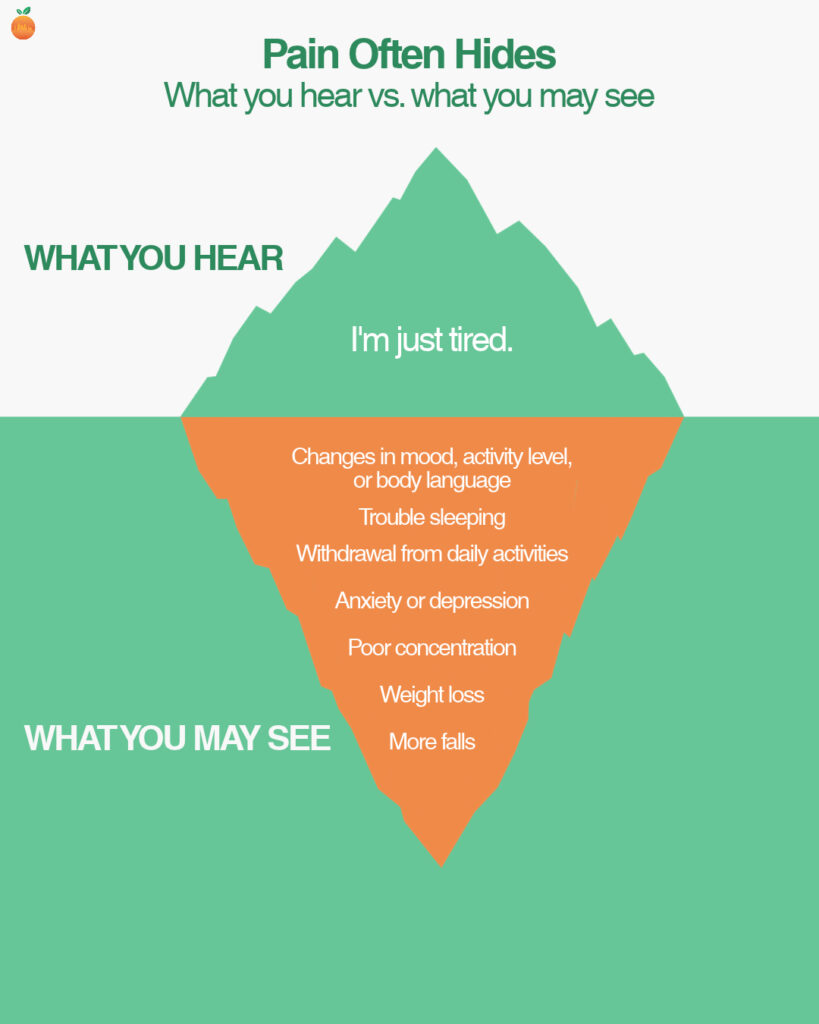
Many older adults will not complain. Some fear being a burden. Others think pain is simply part of getting older. The Health in Aging Foundation says to watch for these changes:²
- Changes in mood, activity level, body language, or facial expressions
- Trouble sleeping
- “Bad moods,” or withdrawal from daily activities
- Anxiety or depression
- Poor concentration
- Weight loss
- More falls
Believe what your parent tells you. Their own report is the most reliable measure of their pain.²
Confusion does not mean pain is absent. Even when people are confused, they can often still let you know when they hurt.² If your parent has Alzheimer’s disease, call the doctor when you see signs such as agitation, crying, or refusing to eat and you are not sure what to do.¹
How Do You Describe Pain to the Doctor?
Be ready to tell the doctor where it hurts, when it started, what it feels like, and what makes it better or worse. Describe the feeling as sharp, dull, burning, or aching. Rate it mild, moderate, severe, or unbearable, or use a zero-to-ten scale. A daily pain diary helps the doctor see patterns over time.¹²
Clear details lead to better treatment. Vague answers lead to guesses. Use the diary below to collect them.
What Should a Pain Diary Include?
Keep one page by the bed or on the fridge. Fill it in once or twice a day. Include these items:
- Where the pain is, and whether it moves or affects more than one area²
- How strong it is, from mild to unbearable²
- What it feels like: sharp, stabbing, dull, aching, burning, or electric shock²
- Any numbness, tingling, or new weakness²
- What makes it better or worse¹
- Each medicine taken, the dose, and the time
- Sleep, appetite, and mood that day
- Questions for the next visit
Bring the page to every appointment. It turns “she has been hurting a lot” into facts the doctor can use.
Which Pain Medicines Are Safest for Older Adults?
Acetaminophen is usually the first medicine tried for mild to moderate pain in older adults. NSAIDs such as aspirin, ibuprofen, and naproxen carry higher risks after age 65, including stomach bleeding and harm to the kidneys or heart. Opioids need a prescription and fit moderate to severe pain. Always ask the doctor before giving any of them.³
Older adults feel medicine side effects more. Take the exact prescribed dose.¹ Never change a medicine on your own because it seems ineffective. Talk with the doctor or nurse instead.¹
What Should You Know About Acetaminophen?
Acetaminophen is a common first choice, but it hides in many products. Cold and flu medicines and prescription pain pills often contain it.² Check every label so doses do not add up by accident.
The Health in Aging Foundation advises no more than 2,600 mg of acetaminophen in 24 hours.² Use it carefully with liver disease, severe kidney disease, or a history of heavy alcohol use.³ The National Institute on Aging adds that people who have more than three drinks per day or who have liver disease should not take it.¹
Are NSAIDs Safe for Seniors?
They can cause trouble. NSAIDs are sold over the counter, which makes them feel harmless. Long-term use can lead to internal bleeding or kidney problems.¹ Ibuprofen may not suit people with high blood pressure.¹
The Health in Aging Foundation says not to combine NSAIDs with aspirin or blood thinners.³ If an NSAID is needed, use it for as short a time as possible.² Ask the doctor whether stomach protection is needed.² Our medication management guide can help you keep track of every pill.
What Are the Risks of Opioids?
Opioids can treat moderate to severe pain, but they require a prescription and can be habit-forming.¹ They are dangerous with alcohol or certain other drugs.¹ Side effects include constipation, sleepiness, confusion, itching, and higher fall risk.³
Providers usually start with a low dose and increase it slowly.³ After long-term use, doses should be reduced slowly to avoid withdrawal.³ Store these medicines safely, and keep a list of every drug your parent takes.
What Non-Drug Options Can Help?
Many drug-free choices ease pain in older adults. Options include gentle exercise like tai chi, physical therapy, heat or cold on the skin, massage, relaxation, deep breathing, and cognitive behavioral therapy. Music, storytelling, and pet therapy can also distract from pain. Combining these with medicine may work better than either one alone, so ask the doctor.¹³
Our physical therapy at home guide explains what a visit looks like. Ask the doctor which choices suit your parent. Not every option fits every person.
What Can Families Do at Home?
Small habits add up. The National Institute on Aging suggests these self-help steps:¹
- Keep a healthy weight
- Stay as physically active as the doctor allows
- Get enough sleep
- Avoid tobacco, caffeine, and alcohol
- Consider joining a pain support group
For a loved one in bed most of the day, regular position changes, gentle movement, and massage help.³ Touch and massage also bring comfort.³ Include the caregiver in the pain plan so everyone follows the same steps.³
What Should You Tell the Doctor Between Visits?
Do not wait for the next appointment. The Health in Aging Foundation lists reasons to call:²
- Pain that does not improve when medicine is used as recommended
- Some relief, but still a lot of pain one or two days after starting a medicine
- New or different pain
- Side effects of any medicine
- Sleep changes
- Trouble coping, such as anxiety, depression, or irritability
Any new pain should be checked early, since it is easier to manage then.¹ If the current plan is not working, ask about other options or a pain specialist.¹
Call 911 for sudden, severe pain, chest pain, or signs of a stroke. Fast action matters.
What Questions Should You Ask the Doctor?
Bring a short list. These questions cover the key ground:
- What is causing the pain?
- Which medicine is safest for my parent, and what are the side effects?
- How much can we take in a day, and for how long?
- Which non-drug options could help?
- Would a physical therapist or pain specialist make sense?
- When should we call, and when should we go to the emergency room?
Write down the answers. Share them with everyone who helps your parent.
How City Choice Home Health Care of Florida Supports Seniors in Pain
For more than two decades, City Choice Home Health Care of Florida has helped families in Boca Raton, Delray Beach, and Boynton Beach. We are Medicare-certified and have served more than 1,000 families. Skilled nursing and therapy, including physical, occupational, and speech therapy, can be provided at home.
Our caregivers help with bathing, dressing, meals, medication reminders, and rides to appointments. Overnight and 24-hour care are available when your parent needs more support. Read about what home health aides can and cannot do to plan the right help.
Contact City Choice Home Health Care of Florida to talk through what your family needs.
Frequently Asked Questions
Is pain a normal part of aging?
No. The National Institute on Aging says pain is not an inevitable part of aging.¹ New pain should be checked early.¹
What is the safest pain reliever for seniors?
Acetaminophen is usually tried first for mild to moderate pain.³ Check labels for hidden doses, and ask the doctor before starting anything.²
Can seniors take ibuprofen?
Use caution. NSAIDs carry higher risks for adults over 65.³ Ask the doctor first.
Do non-drug treatments really work?
They can help. Options include physical therapy, heat, cold, massage, and relaxation, and combining them with medicine may work better.¹³
Pain Is Not Something to Just Accept
Pain management in elderly adults works best when families notice early and speak up. Start with a one-page diary and a list of questions. Then call the doctor about anything that changes.
Related Articles
- Medication Management for Seniors in Delray Beach
- Physical Therapy at Home in Palm Beach
- What Home Health Aides Can and Can’t Do
- Home Safety Checklist
- Fear of Falling in Delray Beach
Sources
1. National Institute on Aging. Pain: you can get help. Archived December 18, 2020. Accessed November 12, 2026. https://webarchive.library.unt.edu/web/20201218055406/https://www.nia.nih.gov/health/pain-you-can-get-help
2. American Geriatrics Society, Health in Aging Foundation. Caregiver guide to pain. Last updated July 2015. Accessed November 12, 2026. https://www.healthinaging.org/tools-and-tips/caregiver-guide-pain
3. American Geriatrics Society, Health in Aging Foundation. Pain management: care and treatment. HealthInAging.org. Accessed November 12, 2026. https://www.healthinaging.org/a-z-topic/pain-management/care-treatment