 Senior Health Wellness
Your father says he feels fine. Then, before lunch, he turns shaky, sweaty, and confused. A blood sugar check shows a low reading. Moments like this scare families, and they can happen with diabetes in elderly loved ones.
This guide explains the warning signs and what to do when blood sugar drops. It covers which checkups matter most and how to share the work without taking over. You will also find a simple daily log and a clear plan for lows that any family member can follow.
What Is Diabetes in Elderly Adults?
Diabetes in elderly adults is a long-term condition in which the body cannot keep blood sugar, also called glucose, in a healthy range. Common signs include feeling tired, increased hunger or thirst, and losing weight without trying. Over time, high blood sugar can lead to heart disease, stroke, kidney disease, eye problems, and nerve damage.¹
Other signs include frequent urination, blurred vision, skin infections, and slow healing of cuts and bruises.¹ Many of these signs look like normal aging. That is why a blood sugar test tells you more than a guess does.
The National Institute on Aging notes that millions of older Americans have prediabetes.¹ Call the doctor about any sign of high blood sugar. Do not wait for the next routine visit.¹
What Are the Signs of Low Blood Sugar in Seniors?
Low blood sugar, or hypoglycemia, usually causes symptoms when glucose falls below 70 mg/dL. Common signs include shakiness, sweating, irritability, confusion, a fast heartbeat, dizziness, hunger, and nausea. Symptoms can come on quickly and differ from person to person. The only sure way to confirm a low is to check blood sugar with a meter.²
The American Diabetes Association also lists these signs:
- Sleepiness or weakness
- Blurred vision
- Tingling in the lips or tongue
- Headaches and clumsiness
- Nightmares, and in some cases seizures
Some people have a low and feel nothing at all. This is called hypoglycemia unawareness.² A long history of diabetes and frequent lows raise the risk.²
Related Study/Source: The American Geriatrics Society’s Health in Aging Foundation warns that frail older adults are at higher risk of low blood sugar because they may not notice the early warning signs.³ Overly strict control can also cause dangerous lows.³
Watch for confusion most of all.³ A parent who suddenly acts sleepy, clumsy, or confused may be having a low.²
What Should You Do When Blood Sugar Drops?
Treat a low with the 15-15 rule. If blood sugar is at or below 70 mg/dL, give 15 grams of fast-acting carbohydrate, such as glucose tablets, glucose gel, or half a cup of juice. Wait 15 minutes, then recheck. If the reading is still below 70, repeat. Once it rises, offer a snack with protein and carbs.²
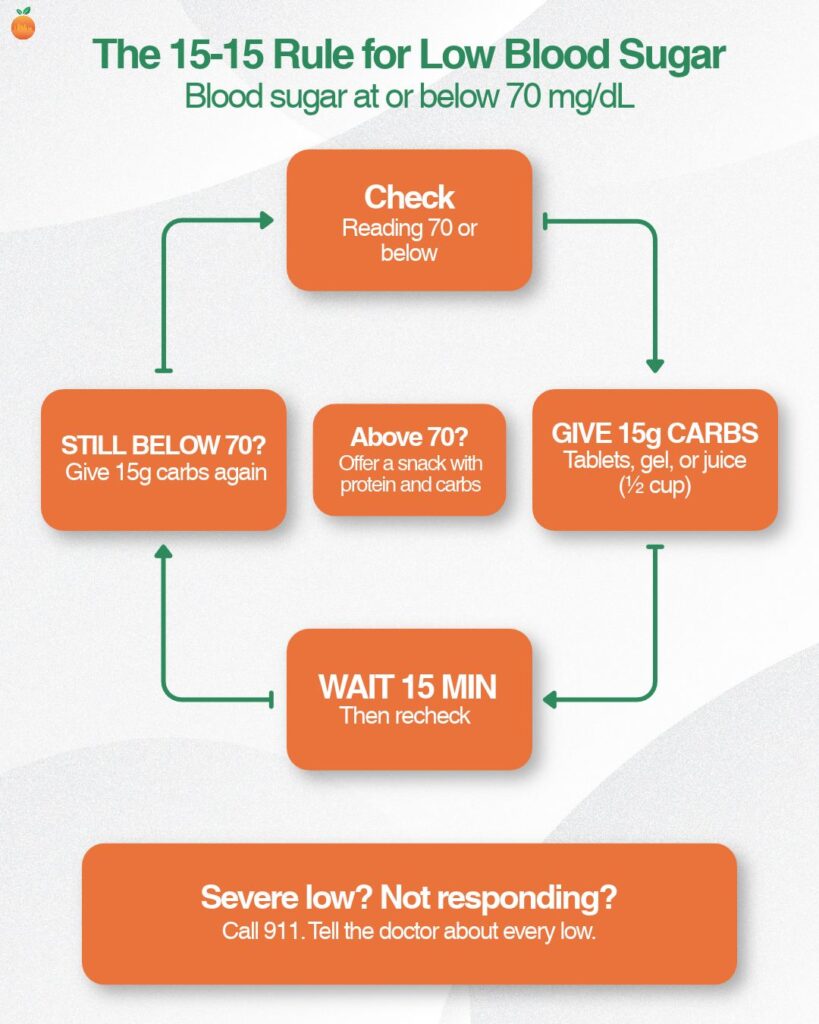
Follow these steps in order:
- Check blood sugar if you can. If you cannot check and the person has symptoms, treat the suspected low.²
- Give 15 grams of fast-acting carbs.
- Wait 15 minutes, then recheck.
- Repeat if the reading is still below 70 mg/dL.
- Once it is above 70 and a meal is not coming soon, give a snack with protein and carbs, such as cheese crackers.²
Fast-acting choices include glucose tablets, a tube of glucose gel, half a cup (4 ounces) of juice or regular soda, and a tablespoon of sugar. Hard candies or jellybeans also work if the label shows 15 grams of carbs.² Avoid diet soda. Chocolate and peanut butter are poor choices as well, because their fat, fiber, or protein slows absorption.²
Severe lows are an emergency.² Call 911 if you cannot treat the low at home or the person is not responding.
Tell the doctor about every low. Write down the time, what happened, and what the person ate. The American Diabetes Association also suggests writing down symptoms after a low, so the person can recognize the next one sooner.²
How Can Daily Habits Keep Blood Sugar Steady?
Small, steady habits do most of the work. The National Institute on Aging offers simple advice for older adults:¹
- Check glucose as the care plan directs
- Take medicines as prescribed, even when feeling well
- Be active most days of the week
- Brush and floss every day
- Look at the feet every day
Carry fast-acting carbs at all times. Make sure close family members know the signs of a low.² A continuous glucose monitor, or CGM, can sound an alarm when levels are low or falling.² Ask the doctor whether one makes sense.
Check blood sugar before driving, too.² A low behind the wheel puts everyone at risk. If your parent has had recent lows, ask the doctor whether driving is safe right now.
Which Checkups Matter Most for Seniors With Diabetes?
Seniors with diabetes need regular checkups. Older adults who do not use insulin may need an A1C test only every three to six months. Everyone should have a yearly eye exam and see the dentist twice a year. A podiatrist should check the feet, especially after any sore, blister, or break in the skin.¹³
Feet deserve a daily look. The National Institute on Aging advises checking for red patches every day.¹ See a podiatrist for sores, blisters, skin breaks, infections, or calluses.¹ A small sore can turn serious fast. Our wound care guide explains what home care can do.
Eye exams find problems early, before vision changes become obvious.¹ Dental visits matter too. Gum health is part of diabetes care.¹
How Do A1C Goals and Medicines Work for Older Adults?
There is no single target for everyone. The Health in Aging Foundation says people with diabetes should work with their provider to set the best A1C goal.³ That goal depends on overall health, thinking ability, other conditions, and life expectancy.³
Tight control is not always better. Lower numbers can bring dangerous lows, especially in frail older adults.³ Ask the doctor what range fits your parent.
Diabetes medicines vary, and some cause side effects such as stomach upset or weight loss.³ Review every medicine at each visit. Our medication management guide can help you stay organized. Three habits make the review easier:
- Keep a current list of all medicines, including over-the-counter drugs, vitamins, and supplements
- Bring the actual bottles to appointments
- Fill prescriptions at one pharmacy if possible³
How Much Help Does Your Parent Need?
The Health in Aging Foundation asks caregivers to notice whether the older adult can manage diabetes alone.³ Some can. Others need a family member to step in. Most land somewhere in between.
Ask yourself these questions:
- Can your parent read the meter and write down the number correctly?
- Does your parent take medicines on time without reminders?
- Does your parent notice a low, or does someone else spot it first?
- Can your parent shop for food and prepare meals safely?
- Is your parent getting to appointments?
A “no” to any of these does not mean your parent has failed. It means one task needs support. Start with that task. Leave the rest alone for now. Independence matters, and small handoffs protect it.
What Should a Daily Diabetes Log Include?
A one-page log helps the doctor see patterns. If a person uses insulin, the provider may recommend checking glucose at least once a day.³ Keep the log on the fridge or in a folder by the phone. Include these items each day:
- Date and time of each blood sugar reading
- The reading itself
- What the person ate, and when
- Whether each medicine was taken
- Symptoms, such as shakiness, thirst, or tiredness
- Whether the feet were checked
- Questions for the doctor
Add a low-sugar plan card beside it. Write the 15-15 steps in large print. Add the doctor’s phone number and “Call 911 if not responding.” Anyone in the home can then act fast, even if your parent cannot speak.
What About Depression and Memory Concerns?
Diabetes affects more than the body. The National Institute on Aging urges older adults to talk with their doctor about depression and memory concerns, along with side effects and medicine costs.¹ People with type 2 diabetes may also face a higher risk of Alzheimer’s disease.¹
Missed doses, skipped meals, and confusion can all signal a problem. If memory changes worry you, read our guide to dementia for Boca Raton families. Then share what you see with the doctor.
When Should You Call the Doctor or 911?
Call the doctor about signs of high blood sugar, such as extreme thirst, frequent urination, or blurred vision.¹ Lows that keep happening also need a call. Ask about adjusting glucose targets or the treatment plan.² Raise any new foot sore, side effect, or change in mood.
Call 911 for a severe low.² Do the same for stroke signs or chest pain. Diabetes can lead to heart disease and stroke over time.¹ Fast action matters.
How City Choice Home Health Care of Florida Supports Seniors With Diabetes
For more than two decades, City Choice Home Health Care of Florida has helped families in Boca Raton, Delray Beach, and Boynton Beach. We are Medicare-certified and have served more than 1,000 families. Skilled nursing and therapy, including physical, occupational, and speech therapy, can be provided at home.
Our caregivers help with bathing, dressing, meals, medication reminders, and rides to appointments. Overnight and 24-hour care are available when your parent needs more support. Read what to expect in a home care assessment before you call.
Contact City Choice Home Health Care of Florida to talk through what your family needs.
Frequently Asked Questions
What blood sugar level is too low?
For most people, symptoms start when glucose falls below 70 mg/dL.² Some people have no symptoms at all, so a meter check is the only sure way to know.²
Can someone have low blood sugar and feel nothing?
Yes. This is called hypoglycemia unawareness.² A CGM with an alarm may help, and close family should know the signs to watch for.²
Is chocolate a good way to treat a low?
No. The fat and protein in chocolate and peanut butter slow absorption.² Glucose tablets, gel, juice, or regular soda work faster.²
How often should an older adult with diabetes see the eye doctor?
The National Institute on Aging recommends a yearly eye exam.¹ A dentist should check the teeth and gums twice a year.¹
Small Steps Add Up
Diabetes care in later life is not about perfect numbers. It is about steady habits, a clear plan for lows, and a team that knows what to watch for. Start with a log, a low-sugar plan card, and the next checkup. Then build from there.
Related Articles
- Medication Management for Seniors in Delray Beach
- Wound Care in Palm Beach
- Dehydration in Elderly Adults
- Home Safety Checklist
- What to Expect in a Home Care Assessment
Sources
1. National Institute on Aging. Diabetes in older people. Archived December 18, 2020. Accessed November 12, 2026. https://webarchive.library.unt.edu/web/20201218055425/https://www.nia.nih.gov/health/diabetes-older-people
2. American Diabetes Association. Signs, symptoms, and treatment for hypoglycemia (low blood glucose). Accessed November 12, 2026. https://diabetes.org/living-with-diabetes/hypoglycemia-low-blood-glucose/symptoms-treatment
3. American Geriatrics Society, Health in Aging Foundation. Diabetes: care and treatment. HealthInAging.org. Accessed November 12, 2026. https://healthinaging.org/a-z-topic/diabetes/care-treatment