 Home Health & Hospice
There comes a point in some illnesses when the goal shifts — from cure to comfort. For many families facing this decision, considering hospice care in Boca Raton as an option can provide much-needed support and guidance. That moment brings one of the most important decisions a family will face. Where should that care take place?
For many people, the answer is home.
Home hospice care lets patients receive expert medical support, pain management, and emotional care at home. They stay surrounded by family, familiar routines, and the comfort of their own space. It is not about giving up. It is about choosing quality of life, on your own terms, for whatever time remains.
BMC Palliative Care defines a good death as one free from avoidable suffering. It should align with the patient’s wishes and meet clinical and ethical standards. That definition is exactly what home hospice care is designed to achieve.
This guide explains what home hospice care is, who qualifies, and what families can expect from hospice care in Boca Raton.
Related study: Why Is Hospice Care Important?
What Is Home Hospice Care?

Hospice care is for patients with a terminal illness and a life expectancy of six months or less. It moves away from curative treatment. The focus becomes comfort — managing pain, controlling symptoms, and supporting emotional and spiritual needs.
Home hospice care brings this support directly to the patient’s residence. Rather than spending their final months in a hospital or clinical facility, the patient remains at home — and a coordinated team of professionals comes to them.
A home hospice team typically includes:
- A hospice physician or medical director — overseeing the patient’s care plan and managing complex medical decisions
- Registered nurses — conducting regular visits to assess symptoms, manage medications, and monitor the patient’s condition
- Home health aides — assisting with personal care, bathing, dressing, and daily comfort
- Social workers — helping families navigate practical matters, coordinate resources, and process the emotional weight of the situation
- Chaplains or spiritual care providers — offering non-denominational spiritual support tailored to the patient’s and family’s beliefs
- Bereavement counselors — providing grief support to family members both before and after the patient’s passing
- Volunteers — offering companionship, respite, and practical assistance to families
The goal of this team is not to hasten or prolong death — it is to ensure that the time remaining is as comfortable, meaningful, and dignified as possible.
Related: Home Care vs. Home Health Care
Who Qualifies for Home Hospice Care in Boca Raton?
To qualify for hospice care in Boca Raton — and for Medicare or Medicaid coverage of hospice services — a patient must meet the following criteria:
- A physician has certified that the patient has a terminal illness with a life expectancy of six months or less, if the disease follows its expected course
- The patient (and ideally family) has made an informed decision to focus on comfort care rather than curative treatment
- The patient chooses to receive care at home rather than in a facility
Common diagnoses that lead families to consider hospice include advanced cancer, congestive heart failure, chronic obstructive pulmonary disease (COPD), end-stage renal disease, Alzheimer’s disease and other forms of dementia, ALS, and Parkinson’s disease.
Choosing hospice does not mean abandoning all medical care. Patients continue to receive treatment for symptoms and conditions unrelated to their terminal diagnosis. And if a patient’s condition improves or they choose to pursue curative treatment again, they can withdraw from hospice at any time.
What Does Home Hospice Care in Boca Raton Actually Look Like?
Many families are surprised by how much support home hospice actually provides — and how different it is from simply “waiting.”
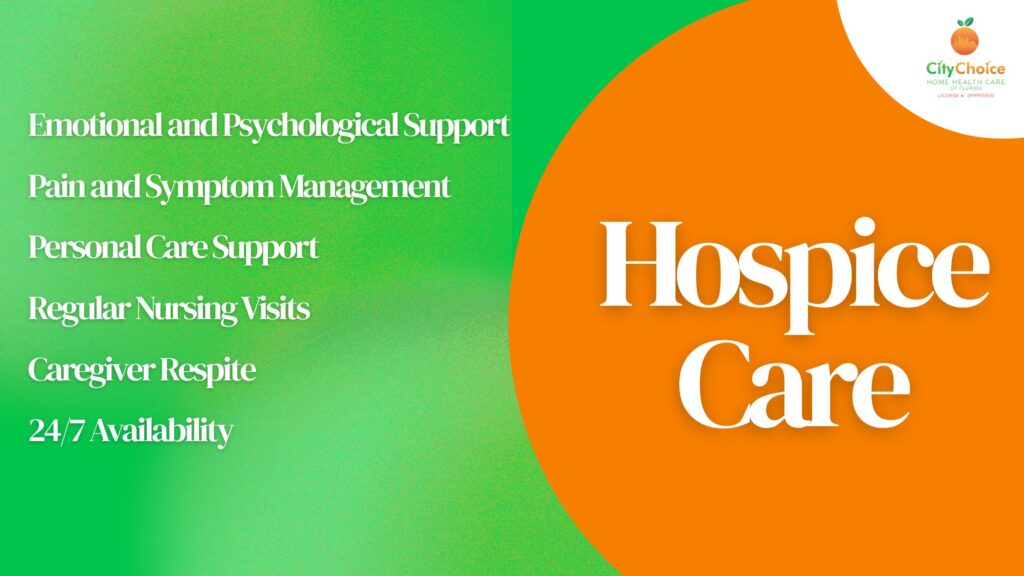
Pain and Symptom Management
This is the foundation of hospice care. Research in BMC Palliative Care found that 60 to 90% of advanced cancer patients experience severe, often unmanageable pain — pain that directly leads to psychological distress, depression, exhaustion, and in some cases, self-isolation. The hospice team works closely with the patient’s physician to develop a medication plan that addresses this pain head-on, managing breathlessness, nausea, anxiety, and other distressing symptoms as they arise. For many patients and families, effective pain management alone transforms the end-of-life experience entirely.
Regular Nursing Visits
Nursing visits provide clinical oversight without the patient ever leaving home. Nurses assess the patient, adjust medications, monitor for changes, and guide family members on care between visits.
Personal Care Support
Home health aides maintain the patient’s dignity and hygiene — bathing, grooming, dressing, and repositioning to prevent pressure sores.
Emotional and Psychological Support
This is a core part of hospice care — not an add-on. Social workers, counselors, and chaplains join the team from day one. They help families process grief, communicate, and find meaning during an incredibly hard time. BMC Palliative Care research found that patients who felt heard and supported reported higher satisfaction and quality of life. Many described hospice as giving them purpose, dignity, and peace they had lost during the illness.
Caregiver Respite
Family members who serve as primary caregivers can request short-term respite care — temporary inpatient care for the patient — so they can rest, attend to their own needs, and return to caregiving without burning out.
24/7 Availability
Families should never feel alone in a crisis. A nurse or on-call clinician should always be reachable, day or night, to guide caregivers through difficult moments at home.
What Home Hospice Does Not Mean
Because hospice care is so often misunderstood, it is worth addressing common concerns directly.
Hospice does not mean the end of all medical care. Patients continue to receive medications, nursing visits, and symptom management. The difference is that the goal of those interventions is comfort, not cure.
Hospice does not mean the patient will be sedated or unresponsive. Good symptom management often allows patients to be more alert and engaged with family — not less. Comfort care and consciousness are not mutually exclusive.
Hospice does not mean dying alone. Home hospice is specifically designed to keep the patient surrounded by the people and environment they love. The hospice team supports the family in being present and capable caregivers.
Choosing hospice is not giving up. Many families describe enrolling in hospice as one of the most loving decisions they made — choosing to prioritize their loved one’s comfort and dignity over the exhaustion of curative treatment that was no longer improving quality of life.
It is also worth acknowledging the toll caregiving takes on families. Research shows that 4 to 70% of family caregivers experience anxiety, depression, and psychological distress when managing a terminally ill loved one at home without structured support. Hospice care is designed to carry that burden alongside the family — providing clinical oversight, emotional support, and practical assistance so that families can focus on being present rather than managing a crisis alone.
Does Medicare Cover Home Hospice Care in Boca Raton?
Yes — Medicare covers hospice care in Boca Raton comprehensively under the Medicare Hospice Benefit, available to Medicare Part A beneficiaries who meet eligibility criteria.
Under this benefit, Medicare covers:
- Physician and nursing services
- Medical equipment (hospital bed, wheelchair, oxygen) delivered to the home
- Medications related to the terminal diagnosis
- Home health aide and homemaker services
- Social work, counseling, and spiritual care
- Short-term inpatient respite care
- Bereavement support for the family after the patient’s passing
Medicaid also covers hospice care for eligible patients, and many private insurance plans include hospice benefits. For patients without insurance coverage, many hospice providers — including nonprofit organizations — offer services on a sliding scale or at no cost.
Unlike many areas of Medicare coverage, the hospice benefit is notably comprehensive. There are no deductibles for hospice services, and most costs are covered in full when the patient is enrolled in a Medicare-certified hospice program.
Related: Rehab Insurance Ran Out? Here’s What Boca Raton Families Need to Do Next
Having the Conversation
One of the hardest parts of hospice care is getting to the conversation. Many families avoid it for fear of upsetting their loved one, or because they feel that raising the topic is somehow giving up on them.
In practice, the opposite is often true. Patients frequently want to talk about their wishes and feel relieved when someone finally asks. The BMC Palliative Care study found that terminally ill patients consistently expressed clear preferences about how they wanted to die — where they wanted to be, who they wanted present, and what mattered most to them. Having that conversation early gives families the ability to honor those wishes while there is still time to act on them.
If you are not sure how to start, a social worker, palliative care specialist, or hospice coordinator can help facilitate the conversation.
When Is the Right Time to Call a Hospice Care in Boca Raton?

Many families wait longer than they need to before reaching out to a hospice provider — often because they are not sure their loved one “qualifies” yet, or because calling feels like a final admission.
The right time to call is when you have questions. A hospice coordinator can assess whether your loved one meets eligibility criteria, explain what enrollment would look like, and answer every question your family has — with no obligation to enroll. The conversation itself costs nothing.
Families who enroll in hospice earlier often report that their loved ones were more comfortable for longer — and that they themselves felt more supported throughout the process. Waiting until the very end means less time to benefit from the full scope of hospice services.
Frequently Asked Questions
Can a patient change their mind and leave hospice?
Yes. Enrolling in hospice is not a permanent or irrevocable decision. If a patient’s condition improves, if they decide to pursue curative treatment again, or if they simply change their mind, they can withdraw from hospice at any time and return to standard medical care. Medicare and Medicaid coverage for regular care resumes immediately upon withdrawal.
What if my loved one lives longer than six months?
A six-month prognosis is a certification requirement for hospice enrollment — not a deadline. If a patient lives beyond six months, they can continue receiving hospice care as long as a physician recertifies that their condition remains terminal. Many hospice patients receive care for well over six months.
Can hospice care be provided in an assisted living facility?
Yes. Home hospice care can be provided wherever the patient calls home — including assisted living facilities, memory care units, and other residential care settings, not just private residences.
Related: Assisted living or home care? An honest guide for Florida families
Will a nurse be available overnight or on weekends?
Quality hospice programs provide 24/7 on-call nursing support. While scheduled visits typically occur during the day, a nurse or clinician should always be reachable by phone during evenings, weekends, and holidays — and can make an urgent visit when needed.
How do we know when it is time to call?
If your loved one has received a terminal diagnosis, is experiencing symptoms that are difficult to manage, or is spending more time in hospitals than at home, it may be time to explore hospice. You do not need to wait for a physician to bring it up — you can reach out to a hospice provider directly to ask questions and understand your options.
What bereavement support is available after a loved one passes?
Bereavement support is a required component of Medicare-certified hospice programs. Most providers offer grief counseling and bereavement resources for family members for up to 13 months following a patient’s passing.