 Family Caregiver Resources
The Centers for Disease Control and Prevention defines aging in place as the ability to live safely, independently, and comfortably in one’s own home. This holds true regardless of age or ability level. Most older adults prefer this over moving to a facility, and for good reason. Familiar surroundings matter, both practically and emotionally.
Staying safe at home takes some preparation, though. Falls remain a leading cause of injury among older adults. Many home hazards are genuinely easy to fix once someone knows to look for them. This home safety checklist walks through the most common problem areas, room by room, giving families a practical starting point for their aging in place plan.
Why a Home Safety Checklist Matters
Most home hazards aren’t dramatic. They’re small, easy-to-overlook details: a loose rug, a dim hallway, a step without a railing. Individually, these seem minor. Combined with age-related changes in balance, vision, or reaction time, they become genuine fall risks.
A room-by-room review catches problems that are easy to miss during normal daily use. Someone who’s lived in a home for decades often stops noticing hazards they’ve simply adapted around. A fresh look, whether from a family member or a professional caregiver, tends to spot things residents themselves overlook. This is exactly why a home safety checklist works best as a shared exercise, not something done alone.
Throughout the Home
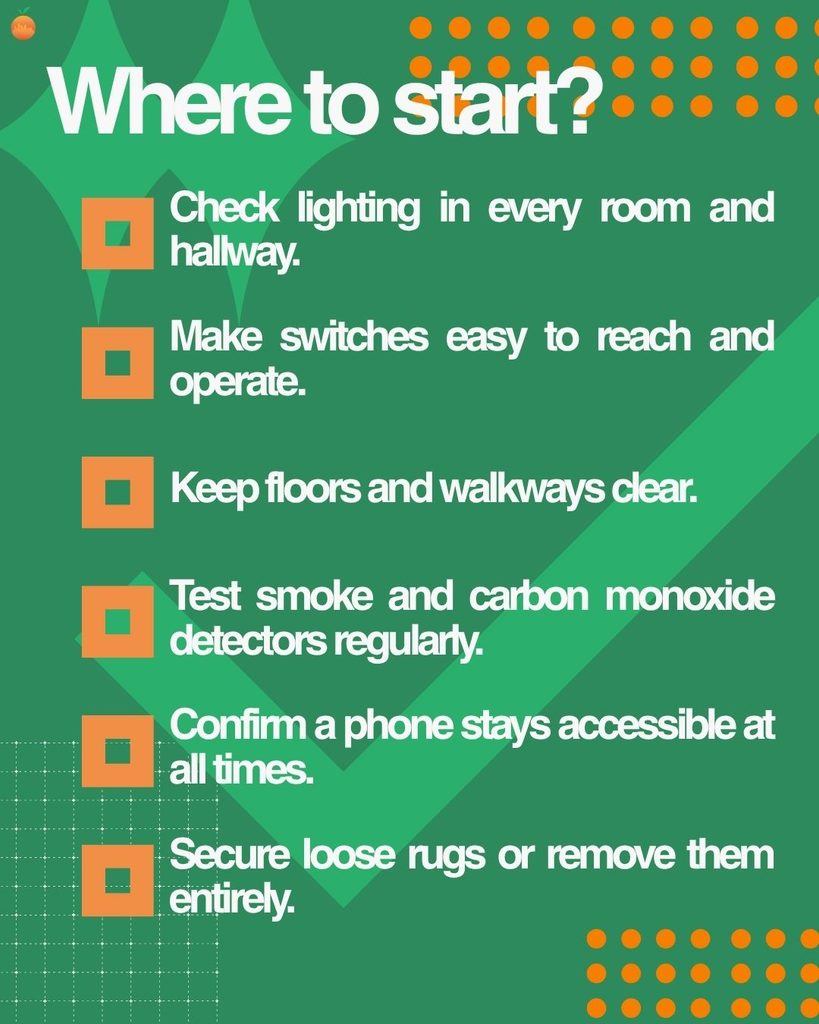
Some safety basics apply to every room, not just one specific area. Here’s where to start:
- Check lighting in every room and hallway. Dim areas make it harder to spot hazards and increase fall risk, especially at night.
- Make switches easy to reach and operate. Light switches near room entrances reduce the need to navigate in the dark.
- Keep floors and walkways clear. Cords, loose rugs, and clutter in pathways are common tripping hazards.
- Test smoke and carbon monoxide detectors regularly. Replace batteries on a consistent schedule, not just when they start beeping.
- Confirm a phone stays accessible at all times, including a way to reach help quickly in an emergency.
- Secure loose rugs or remove them entirely. Non-slip backing helps, but removal is often the safer choice.
Bathroom Safety
Bathrooms carry some of the highest fall risk in the home. Wet surfaces and tight spaces make this room worth extra attention.
- Install grab bars near the toilet and inside the shower or tub. Towel bars aren’t a substitute; they aren’t designed to bear weight.
- Add non-slip mats or strips to the tub and shower floor. Standard tile gets slippery fast when wet.
- Set the water heater to prevent scalding, typically no higher than 120 degrees Fahrenheit.
- Consider a raised toilet seat if standing up from a low seat has become difficult.
- Improve lighting, particularly for nighttime bathroom trips, which carry elevated fall risk.
Kitchen Safety
Kitchens combine mobility demands with fire risk, making a few adjustments particularly worthwhile.
- Keep frequently used items within easy reach, avoiding the need to climb on a stool or stretch overhead.
- Keep a fire extinguisher near the stove, and confirm it hasn’t expired.
- Create a seated work area for meal prep tasks that take time, reducing standing fatigue and fall risk.
- Check that stove knobs and controls are easy to see and operate, especially for anyone with vision changes.
Stairs and Hallways
Stairs deserve particular attention. Falls here often cause more serious injury than falls on level ground.
- Confirm handrails exist on both sides of any staircase, not just one.
- Add contrasting tape or paint to stair edges if depth perception has become an issue.
- Keep stairs completely clear of clutter, including seasonal decorations or storage.
- Improve lighting at both the top and bottom of every staircase.
Bedroom Safety
Nighttime bathroom trips make bedroom safety particularly important.
- Keep a clear, unobstructed path from the bed to the bathroom.
- Add a nightlight or motion-sensor light along that path.
- Position the phone or emergency call device within reach of the bed.
- Confirm the bed height allows for safe, stable transfers in and out.
How a Caregiver Supports Ongoing Home Safety
A one-time checklist review helps, but home safety isn’t really a single event. Needs change over time, and so do the specific risks worth watching. A caregiver’s regular presence in the home means someone notices these details on an ongoing basis, not just during a single walkthrough.
City Choice caregivers help identify safety concerns as part of routine care. Anything that changes gets flagged to the nursing team overseeing the case. This includes noticing new mobility challenges or medication side effects that might affect balance. It also includes simple wear and tear on safety equipment already in place.
Beyond the Checklist
Some safety needs go beyond what a general checklist covers. A client managing a specific condition often benefits from a more individualized safety assessment as part of their broader aging in place strategy. The same holds for someone recovering from surgery or dealing with progressive mobility changes. If your family is already thinking about fall risk specifically, our guide on fear of falling covers related ground worth reviewing.
Related Article:
Aging in Place Support From City Choice
Boca Raton, Delray Beach, and Boynton Beach all have significant populations of older adults choosing to age in place, often in homes they’ve lived in for decades. Familiarity with these communities means City Choice caregivers understand common home layouts and safety considerations specific to the area.
Free consultations let families discuss specific home safety concerns before committing to a care plan. The need might be a single safety assessment or ongoing caregiving support. Either way, the goal stays the same: helping someone stay safely and comfortably in the home they know.
Frequently Asked Questions
How often should a home safety checklist get reviewed?
An annual review makes sense for most households as part of an ongoing aging in place plan. Additional checks make sense too, after any fall, hospitalization, or significant change in mobility or vision.
What’s the single most important home safety change to make first?
Bathroom modifications, particularly grab bars, tend to address the highest-risk area first on any home safety checklist. Lighting improvements throughout the home are a close second.
Can a caregiver help identify safety hazards in the home?
Yes. City Choice caregivers routinely notice safety concerns during regular visits. They can flag anything worth addressing to the family and nursing team.
Do home safety modifications require a professional installer?
Some, like grab bars, need proper installation to bear weight safely. These shouldn’t be a DIY project without the right anchoring. Others, like improved lighting or rug removal, are simple enough for most families to handle directly.
Talk to City Choice
A safer home doesn’t require major renovations, usually just a thoughtful review and a few targeted changes. This home safety checklist covers the basics, but City Choice can help identify what matters most for your loved one’s specific aging in place plan.
Call 305-363-7755 or request a free consultation to talk through your family’s home safety needs.
Related Articles